
The rise of GLP-1 medication use over the past decade has transformed societal perceptions of weight loss and created different stigmas surrounding it. Lazenby explores why these stigmas exist and how they influence behavior and communication in her publication, “‘They Call Us Cheaters’: Exploring Stigma Management Communication Strategies During GLP-1 Medication Use.”

“I decided to start researching it after I was at a bachelorette party, and two of the women there were discussing their own GLP-1 use,” said Lazenby. “I noticed how some of these tensions and the stigma around GLP-1 use emerged, and how the women were trying to combat it [the stigma] during those conversations. It really just stuck out in my mind, and I wanted to know more about it.”
When examining the stigma surrounding GLP-1 medication use, Lazenby found that perceptions often fell into a black-and-white mentality. On one side, some people viewed GLP-1 medications as “cheating” when it came to weight loss or believed that those who used them were abusing the medication.
On the other side, Lazenby found a group that supported GLP-1 use, including individuals who took the medication for medical reasons, such as managing diabetes, as well as those who were open about using it for weight loss. Her research found that there was little room for a middle ground when it came to how people perceived GLP-1 medication use.
“I think the reality of the situation is that GLP-1 use is very nuanced. People take GLP-1 medications for a variety of reasons, sometimes just for weight loss, sometimes just for medical reasons, and sometimes a little bit of both,” said Lazenby.
Along with facing stigma from friends, family, and social media, GLP-1 users may also experience self-stigma. Lazenby found that some users felt guilty for being happy about the weight they had lost, reflecting a deeper issue surrounding GLP-1 stigma – how bodies and weight are stigmatized in the United States.
“People often had to grapple with these thoughts of, ‘Why do I want to lose weight? Am I allowed to want to lose weight? What does it mean that I am happy that I’m losing weight?’ And those are really deep questions for participants that they often grapple with while on GLP-1’s,” said Lazenby.
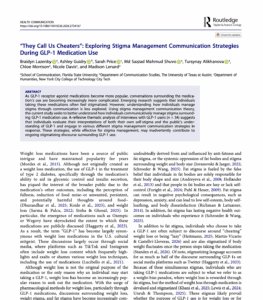
When using communication strategies to manage the stigma surrounding GLP-1 use, users can sometimes unintentionally reinforce the very stigmas they are trying to avoid. Lazenby found that some users emphasized that they were taking GLP-1 medications for the “right reasons,” suggesting that there is a correct or acceptable way to use the medication.
“It’s important that people realize that users just want to get through these conversations to feel legitimized, and sometimes this reinforces stigma,” said Lazenby. “But it isn’t everyone’s goal to completely eradicate the stigma of the medication they’re using. Sometimes it’s just to get through the conversation or create a sense of understanding about a person’s health decision.”
Lazenby’s research not only challenges the stigmas surrounding GLP-1 use but also examines where these perceptions come from and why they can take such a strong hold. Her research highlights the need for greater awareness and a deeper understanding of the issues surrounding stigma before making assumptions or judgments.
“I would like to see a turning point in our society where instead of just saying a statement that we feel in the moment, we take a beat and wonder, ‘Do I know enough about this topic to make a bold statement like this?’” said Lazenby.