
The Florida IB League of Schools (FLIBS) recently flipped the script when students taught faculty about the uses and implications of artificial intelligence (AI) as a learning tool to be used with caution. The event was spearheaded by Michele Lackovic, an AI expert, and a teacher for 25+ years who is a leading educator and curriculum designer that trains educators globally and has numerous published resources. At a full-day workshop in St. Petersburg, FL, a team of student leaders from the Florida State University (FSU) ThinkAI Association sat side-by-side with over 130 veteran educators to bridge the gap between classroom theory and digital reality.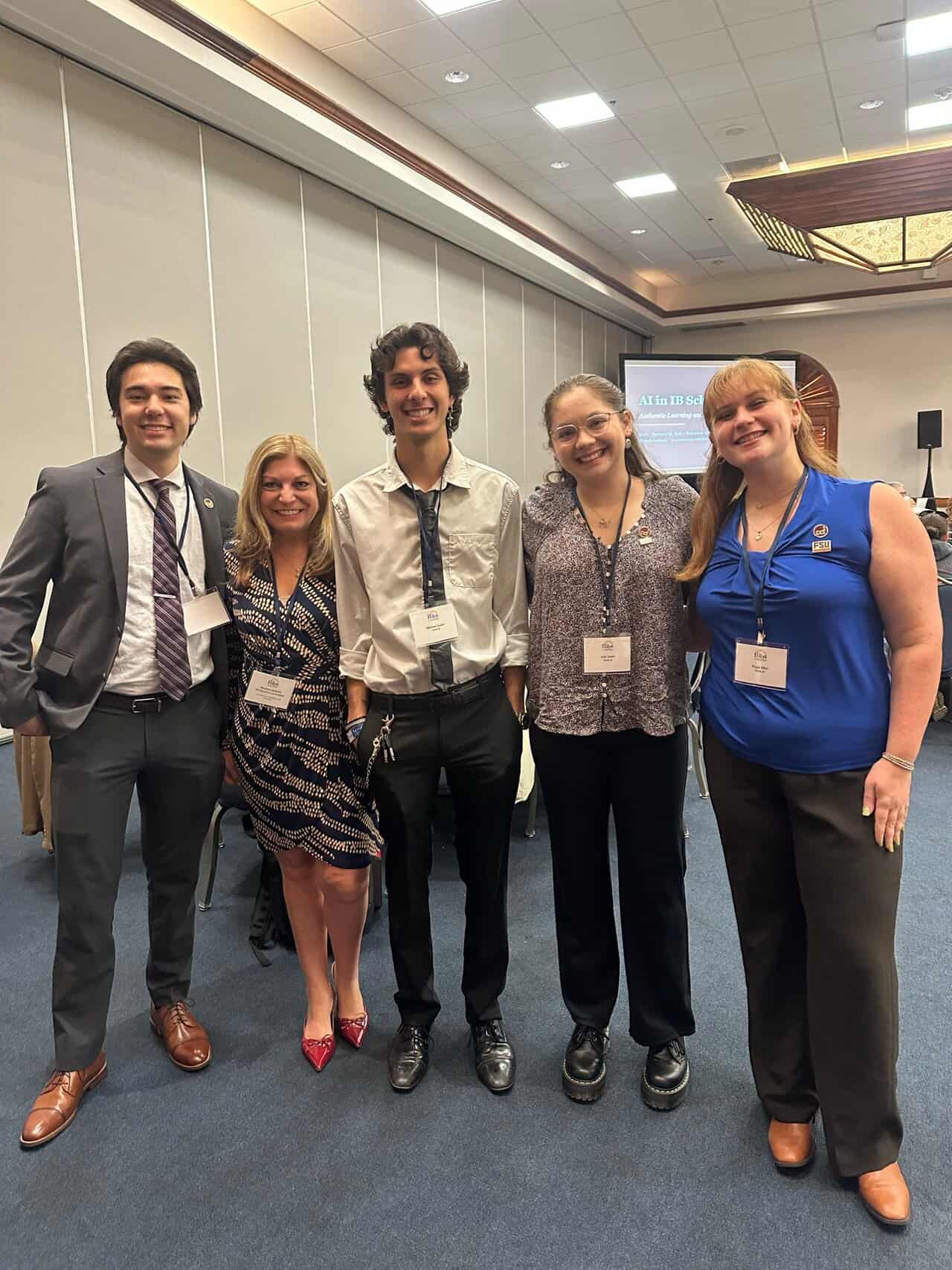
The workshop, titled “AI in IB Schools: Authentic Learning and Digital Ethics,” was a collaborative effort. FLIBS invited Lackovic back to design and facilitate the AI workshop for a second year, and she brought in Dean Randeree and the ThinkAI team as partners. They co-designed the day together, with FSU leading the student panel and deepfakes session within a workshop that also covered assessment authentication, AI pedagogy frameworks, and a full AI toolkit for IB educators. The workshop modeled IB’s own learner-centered, inquiry-based pedagogy, making the session feel less like a lecture and more like a collaborative lab. By bringing university student voices into that established framework, the event created a unique K-20 partnership that bridged the gap between different levels of education.
“Student-led presentations showcase both the university and its training, as well as allow for reverse mentoring to occur,” said Ebrahim Randeree, Associate Dean at the FSU College of Communication and Information (CCI).
The core of this approach is what the team calls a “Thinking Partnership.” Rather than viewing AI as simply a shortcut for cheating, the workshop framed it as a tool that requires human judgment to be effective. “The user brings the context and judgment, and the AI helps you think through it faster,” Randeree explained.
The FSU panel didn’t shy away from the realities of this technology. Student leaders Orion Qualls, Michael Zuazo, Julia Sveen, and Paige Elkin (a recent ICT graduate) co-led the day’s discussions equally. Together, they navigated complex topics ranging from environmental and economic impacts to practical sessions on deepfake detection using the SIFT method.
“There were some thoughtful ethical questions about AI’s impact on the environment, and energy consumption stood out as the biggest concern,” said Orion Qualls, an MSIT student.
Paige Elkin added that while the realism of synthetic media can initially cause anxiety, the mood shifted once the teachers gained practical strategies.
“Be skeptical, but not afraid,” Elkin advised. “If you are not using AI, you are falling behind. If AI does not replace you, someone who knows how to use it will.”
Julia Sveen noted that while teachers were aware of water usage in data centers, many were “shocked” by the advanced capabilities of newer models. Both students addressed the difficult question of how to maintain critical thinking in a world that now can provide instant answers. “Those skills can still be gained if students learn how to use AI as a tool, rather than a crutch,” Sveen said.
The afternoon’s “Principled Play” session allowed educators to gain hands-on experience with tools such as Gemini Live, Cursor, and Opal. Michele Lackovic noted that the FSU students’ fluency was the most surprising element for the teachers. “AI isn’t something these students are theorizing about. It’s already part of how they work, how they study, and how they navigate daily life,” Lackovic said.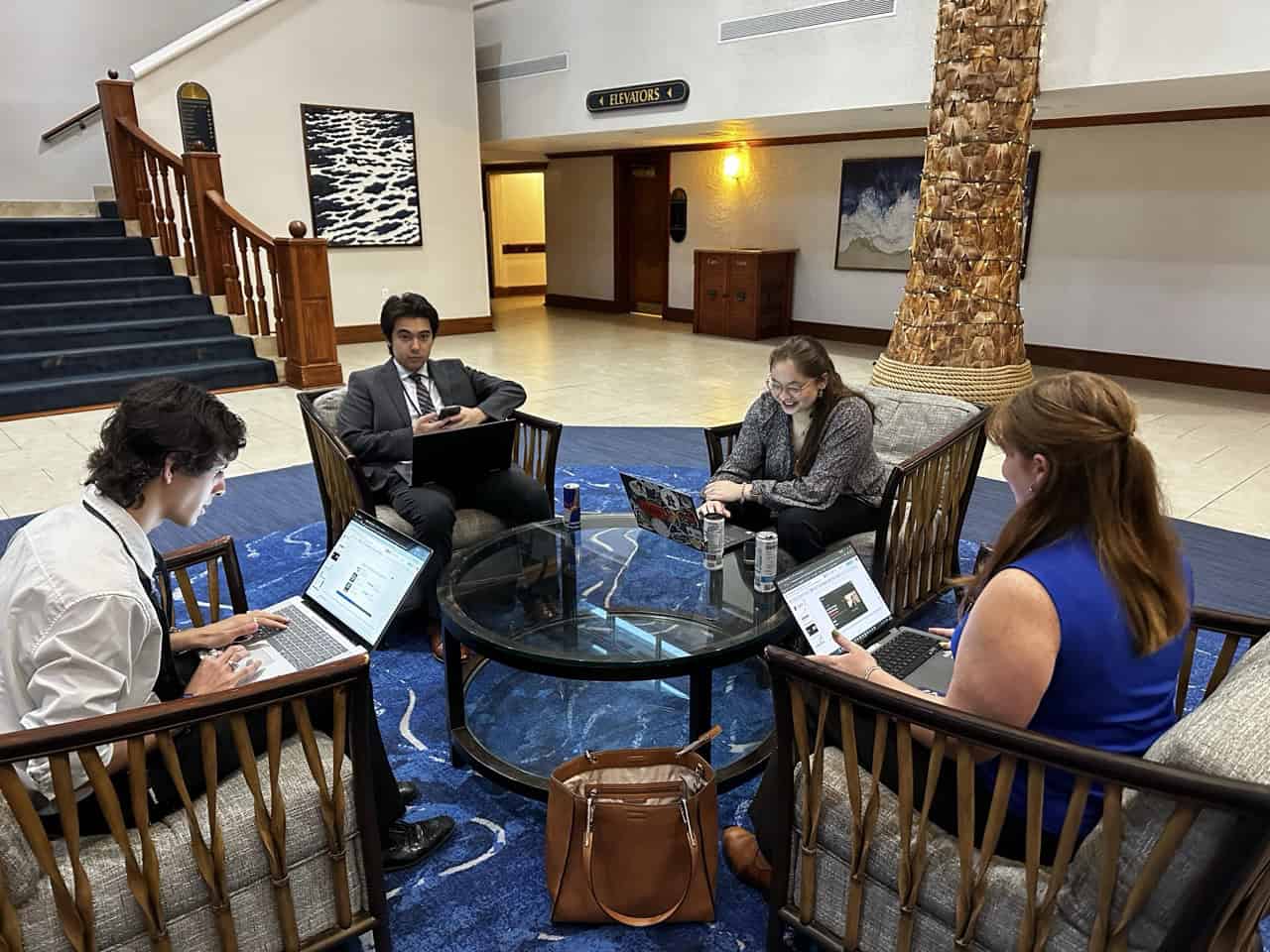
For these FSU students, this experience was a reminder that their studies at CCI have a reach far beyond Tallahassee.
“I think students sometimes assume we’re operating in a bubble,” Qualls said. “But this conference reminded me that the community affected by this work is far larger than I initially realized.”
The feedback from the 130+ educators was overwhelmingly positive, and the partnership was a great success. As the ThinkAI Association continues to grow, this workshop serves as a blueprint for how FSU CCI is leading the state in AI literacy, not just by studying the tech, but by teaching the world how to use it ethically and effectively.