
Roughly 6.7 million people in the United States live with heart failure, with about half of them having heart failure with preserved ejection fraction (HFpEF). Florida State University (FSU) School of Information (iSchool) Professor and Director of the Institute for Successful Longevity Zhe He is part of a team that received a $3.9 million R01 grant and is working with other researchers to move HFpEF care closer to personalized, evidence-based treatment.
This vital research is supported by a $3.9 million R01 grant from the National Heart, Lung, and Blood Institute (NIH/NHLBI) of the National Institutes of Health. The project, “HOPE: Advancing HFpEF Management Through Evidence-based Treatment Optimization and Outcome Prediction,” is led by Principal Investigator Dr. Nans Zong of the Mayo Clinic, with Dr. He serving as a Co-Investigator and FSU Site PI on the multidisciplinar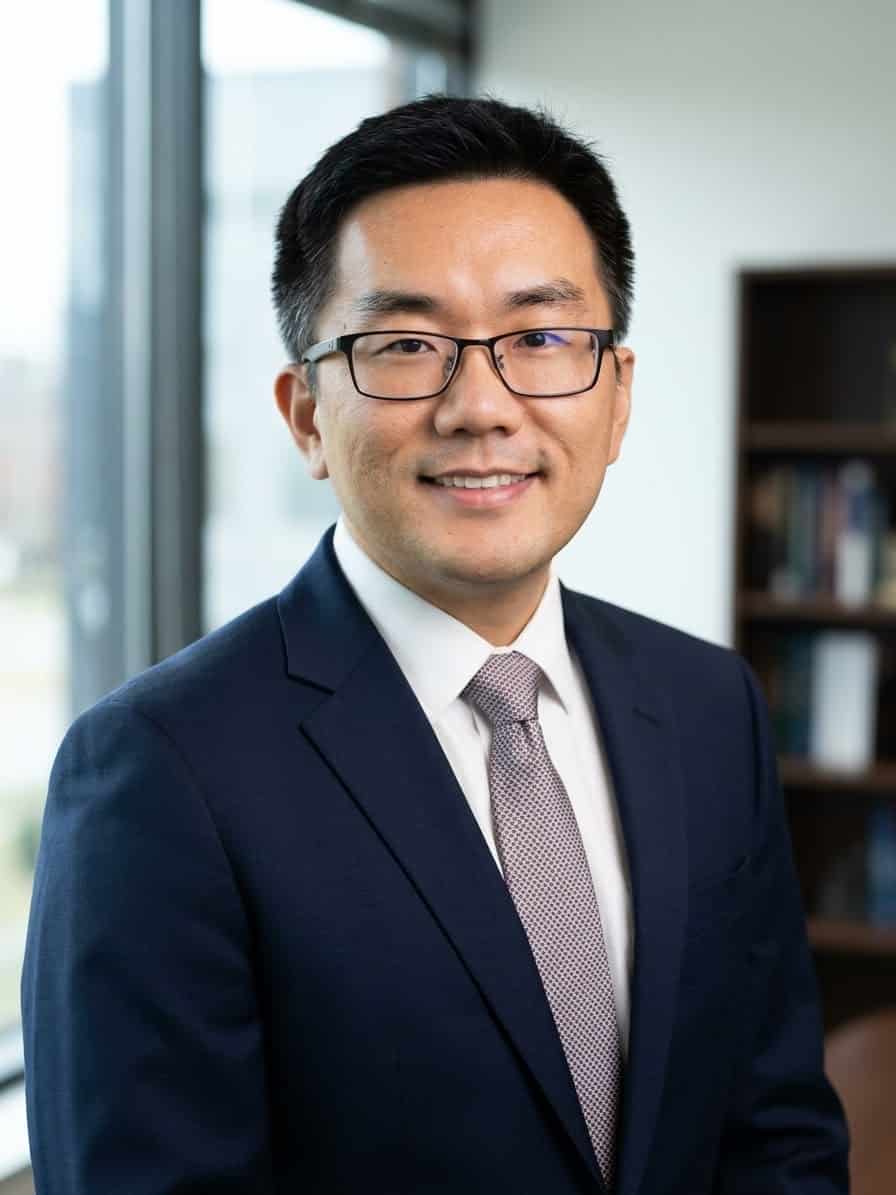 y team.
Dr. He explained, “HFpEF stands for heart failure with preserved ejection fraction. In simple terms, the heart may still pump out a normal percentage of blood, but it does not relax and fill with blood as well as it should. Patients can still experience the symptoms we associate with heart failure, such as shortness of breath, fatigue, and difficulty with physical activity.”
HFpEF can be difficult to treat because patients often have other underlying health conditions such as diabetes, kidney disease, obesity, etc. This means that one patient with HFpEF can require entirely different treatment from another. Dr. He’s team of researchers plans to use AI to help patients receive the unique care they need.
“We are using AI in two major ways. First, we want to learn from large amounts of existing clinical data to better understand which combinations of medications may lead to better outcomes for different types of HFpEF patients. Second, we will develop AI models that examine how a patient’s health changes over time and predict how important clinical indicators—such as measures of heart stress, kidney function and inflammation—may respond to treatment,” said Dr. He.
To successfully cater to patient care, the AI model will not be a one-size-fits-all build. Based on groups of patients with overlapping clinical conditions, the prediction models will be built to support the group’s specific needs. The overall goal of the AI tools is to help clinicians create more personalized treatment plans.
The project team includes members with backgrounds in cardiology, cardiovascular epidemiology, biostatistics, biomedical informatics, artificial intelligence, electronic health records, and clinical research. This allows each researcher to view the problem from a different perspective and offer new insights.
Dr. He said, “What excites me most is that no single discipline can solve this problem. For example, an AI model can find patterns in hundreds of thousands of patient records, but we need clinical experts to determine whether those patterns are medically meaningful, statisticians to ensure our conclusions are rigorous, and informatics researchers to ensure the methods work across different healthcare systems. That combination of perspectives is what makes this project especially exciting.”
If the research is successful, clinicians will be able to make more informed treatment decisions and predict how each patient will respond to the treatment. Furthermore, the data used for the project will come from multiple healthcare systems, so the work can be used in multiple institutions rather than in a single place.
“I hope we can move HFpEF care closer to personalized, evidence-based treatment. Rather than asking only ‘What treatment generally works for HFpEF?’ we want clinicians to eventually have better evidence to answer ‘What treatment is most likely to work for this particular patient, given their health conditions, medications, and clinical history?’” said Dr. He.
He also expressed excitement about FSU’s role in this project. He will lead the external validation component, using the OneFlorida+ Data Trust to evaluate whether the methods the team develops can perform well in a large, diverse patient population. He will work with Dr. Balu Bhasuran at the eHealth Lab on this project.
“For me, this project also illustrates the growing role that biomedical informatics and AI can play in solving important clinical problems. We now have enormous amounts of real-world health data. The challenge is turning those data into reliable evidence that clinicians can use and, ultimately, into better care for patients,” said Dr. He.