
Dr. Zhe He, Professor in the School of Information, has been elected as a Fellow of the American College of Medical Informatics (ACMI). Dr. He was elected alongside just 21 other colleagues this year, joining a highly exclusive group of researchers who represent leading academic medical centers and health systems across the country. The honor recognizes his sustained, high-level contributions to the field.
He will be officially inducted at the AMIA 2026 Annual Symposium in Dallas this November, marking a significant point in an academic journey that has evolved from biomedical ontologies to pioneering patient-centered artificial intelligence.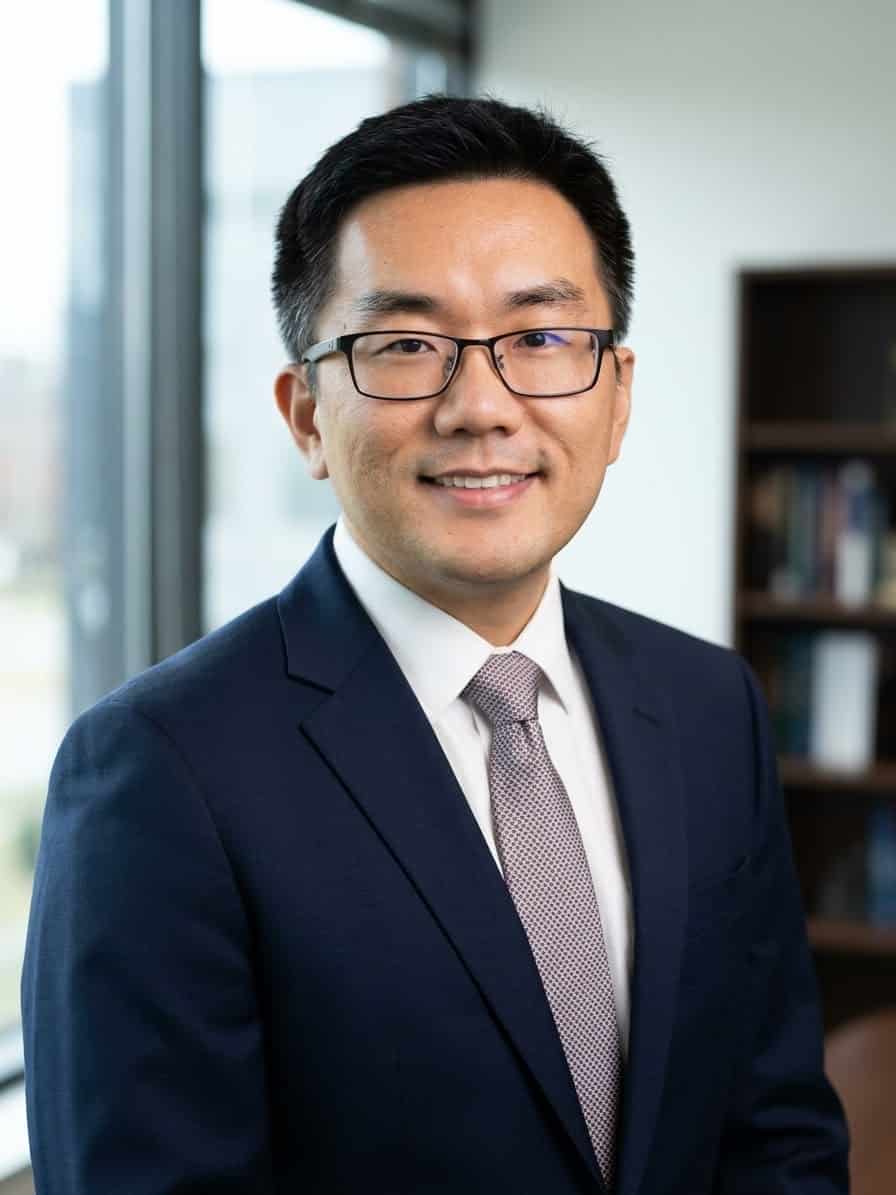
“Being elected as a Fellow of the American College of Medical Informatics (ACMI), one of the highest honors in biomedical informatics, is an incredible recognition and a major milestone in my 17-year research career,” said He. “Professionally, this recognition reinforces my commitment to advancing trustworthy, patient-centered AI that addresses real-world healthcare challenges and improves people’s lives.”
While acknowledging the support of his nominators, Drs. Chunhua Weng and James Cimino, as well as mentors like Drs. James Geller and Yehoshua Perl, He emphasized that his technological achievements are fundamentally designed to empower the public. Much of his recent work focuses on bridging the gap between complex clinical data and everyday patient understanding.
“AI is already helping clinicians synthesize complex medical information, identify important patterns, and support more informed clinical decisions. However, I believe one of its greatest opportunities is empowering patients themselves,” He explained. “Through our federally funded LabGenie project at FSU, we are developing AI systems that help patients understand laboratory test results and communicate more effectively with their healthcare providers.”
By prioritizing underserved populations and older adults, his team aims to demystify complex medical data.
“Our goal is to make healthcare information more understandable, accessible, and actionable,” He said. “AI should support—not replace—clinical judgment and patient-clinician relationships.”
For students and early-career researchers looking to bridge the gap between computing and healthcare, He stresses that the focus must always remain on the human element.
“My most important advice is to start with real healthcare problems, not the technology itself. Build strong technical skills, but also develop an understanding of healthcare, human needs, and interdisciplinary collaboration,” He advised. “Work closely with clinicians, patients, and researchers from different backgrounds. In healthcare, creating an AI system that works technically is only the beginning. Demonstrating that it is trustworthy, useful, equitable, and genuinely improves people’s lives is what matters most.”
Beyond his individual research projects, He is looking toward the broader, long-term impacts of health informatics at FSU.
“I am grateful to Florida State University, the College of Communication and Information, and the many students and collaborators who have contributed to our research,” He reflected. “As Director of FSU’s Institute for Successful Longevity, I am excited to strengthen interdisciplinary collaborations connecting AI, health informatics, and aging research. I hope our work will help ensure that advances in AI benefit not only healthcare professionals but also the patients, families, and communities they serve.”