
Recent Digital Media Production graduates Destiny Lewis and Aidan Marengo will be working with researchers from the Florida State University (FSU) Coastal and Marine Lab to create a film about the Deepwater Horizon Oil Spill. The movie will also focus on the spill’s lasting impacts on shark, ray, and bony fish populations.
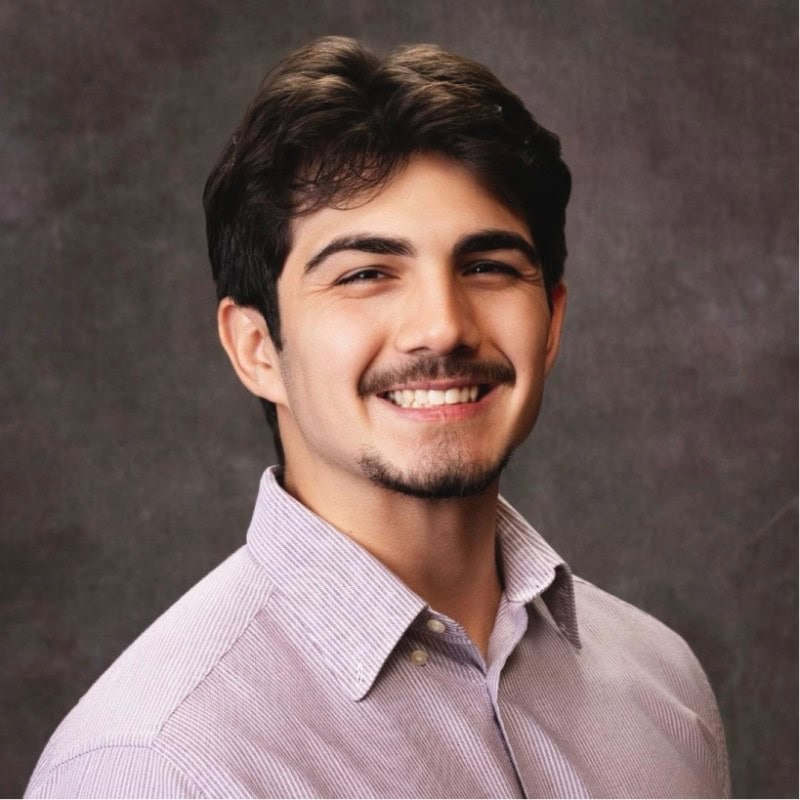
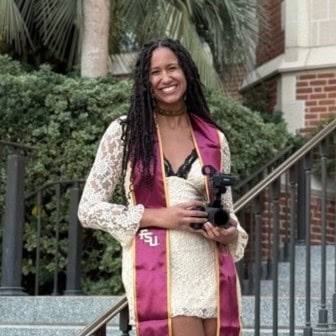
Lewis and Marengo will join a team of researchers in the Gulf of America to document their expedition and findings.
“An opportunity like this is a dream! Growing up in Southern California, I hold marine conservation very near and dear to my heart,” Lewis said. “I am very honored to be working on something so timely and important, which has the capacity to make real change for the health of Florida waters and its inhabitants.”
Lewis graduated from FSU in December of 2025 and has maintained her passion for journalism and filmmaking through various endeavors. She has worked as a multimedia journalist for Planet Forward, a managing editor for the Florida Student News Watch, an intern for the Smithsonian Institution, an intern for the FSU English Department, and a staff writer for the FSView & Florida Flambeau.
When looking ahead to what she’s most excited for on the trip, Lewis pointed out the opportunity to capture the expedition and learn alongside the research team. Aside from the lead scientist, Dr. Dean Grubbs, the team is made up of students looking to gain experience in this area of filmmaking.
“I find it very special that in a lot of ways, we are a group of young people experiencing an amazing opportunity to propel our dreams forward simultaneously,” Lewis said, “and I am so excited to capture all of what that means!”
Lewis highlighted the Deepwater Horizon Oil Spill as one of the most catastrophic environmental disasters to date in the United States and identified the purpose this research can have.
“Research like this helps support protections for the Gulf and other waters like it because if we can still see the lasting ramifications of an event that occurred over 15 years ago, surely we should have protections in place to avoid another disaster,” Lewis said.
For Marengo, the opportunity is particularly exciting because it connects to an experience from his childhood.
“I watched a lot of Shark Week on the Discovery Channel as a kid, and now I’m actually working with marine biologists on a shark research expedition,” Marengo said. “I feel like I’m going on a quest or adventure on the high seas.”
When thinking about the biggest potential challenges, Marengo pointed out the idea that the production team is just himself and Lewis.
“We’re both capable filmmakers, but there are a lot of factors that aren’t in our control,” Marengo said. “Being in a wet, salty, unpredictable environment for a prolonged period of time means protecting our equipment is crucial.”
In this quest, Marengo understands the importance of the story itself, especially given the recent oil spills in the Gulf of America during March 2026. The spill spread more than 373 miles across the ocean and seeped into seven nature reserves.
Marengo detailed that he hopes to emphasize the relatability between the audience and scientists.
“I hope that audiences realize that scientists, despite their knowledge and expertise, are ordinary people like everyone else,” Marengo said. “Showcasing relatability is crucial. An audience is less likely to listen to someone they feel they can’t feel some sort of connection with. We hope to therefore emphasize the importance of this research through the scientists working on the project.”