
School of Information (iSchool) alumnus Clifford Stokes, Jr. was among experts sharing strategies on digital forensics during the Rocky Mountain Cybersecurity Symposium from June 17-18, 2026.
Stokes, who earned his Master of Science in Information Technology from the Florida State University (FSU) iSchool, co-presented “Digital Forensics as a Cross-Functional Investigative Tool: Empowering Law Enforcement, HR, Audit, and Legal Teams” with Dr. William Hunkapiller, an instructor in the iSchool. Their session highlighted investigative support services and demonstrated how collaboration across IT teams can improve the speed and effectiveness of investigations with digital evidence.
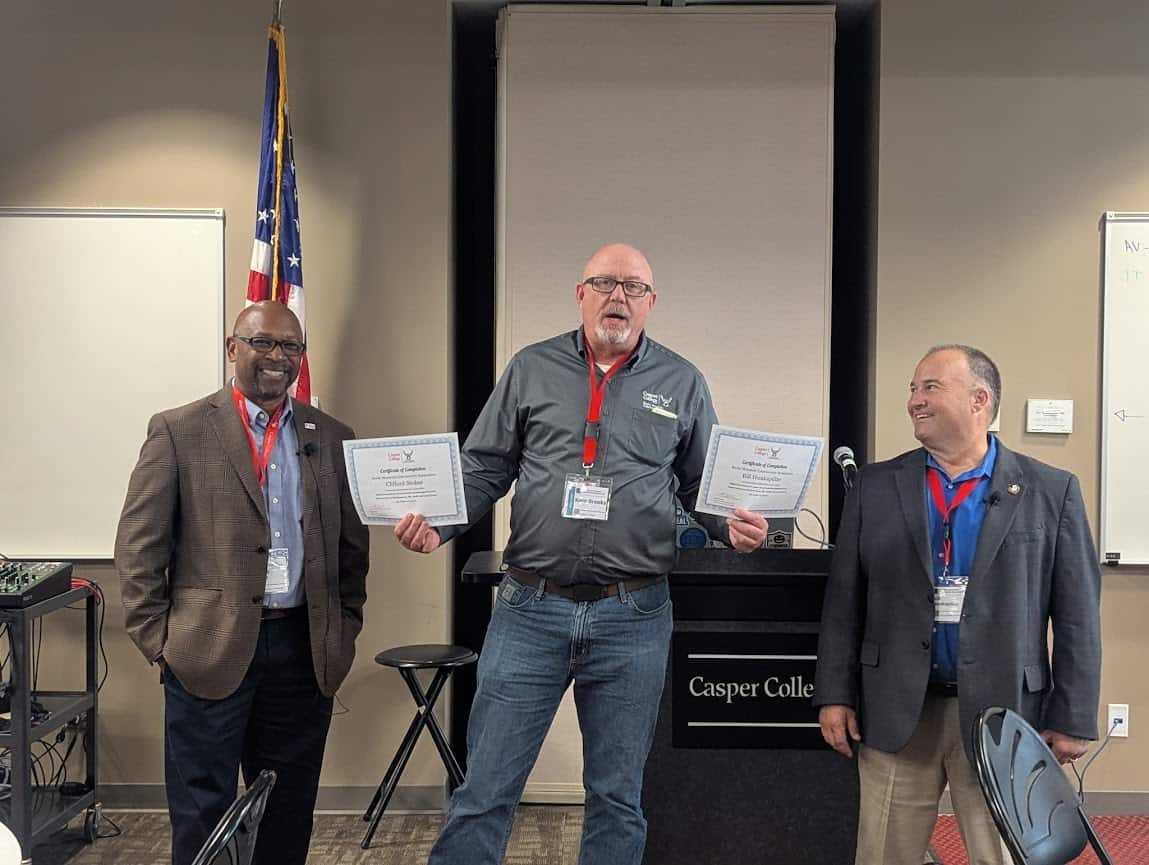
“We shared with the group information about the investigative support services we offer,” Stokes said. “We covered the many system sources of information that are beneficial to not only law enforcement investigations but to our emergency management procedures, such as hurricane response procedures.”
The presentation also explored how coordination with network operations teams can provide investigators with timely access to critical systems, reducing delays during time-sensitive investigations.
Stokes draws on decades of professional experience to help shape his presentation. Before being recently promoted to Deputy Chief Information Security Officer, he served as FSU’s Director of Information Security, where his team supported investigations involving law enforcement, Human Resources, the Office of Inspector General, and the Office of General Counsel.
His nearly 30-year career, combined with a background in law enforcement, has influenced how his team approaches digital investigations.
“We shared with the audience several examples of hurdles that were identified in earlier cases and how we were able to adapt our capabilities to overcome those,” he said.
For Stokes, presenting at the symposium was an opportunity to contribute to the broader cybersecurity community while learning from peers across the country.
“It is always a good opportunity to get out in front of our academic peers and present what we have learned and been able to operate in support of our institution,” he said. “It is important that we share what we’ve learned and accomplished as well as see what others are doing.”
Among the topics that stood out during the conference was the growing use of open-source intelligence, or OSINT. Sessions explored how publicly available information can strengthen investigations, emergency management efforts, and student safety initiatives.
“There was training and a lot of discussion around open-source intelligence,” Stokes said. “This was information and processes that can be used in investigations, emergency management, and especially in student safety situations.”
Looking back on his time at the College of Communication and Information (CCI), Stokes credits CCI with strengthening his leadership approach to cybersecurity.
“It has helped round out my skillset,” he said. “Paired with my close to 30 years of experience, the MSIT exposed me to many administrative strategies that must be considered when in leadership roles in IT and cybersecurity.”
He also noted that the program reinforced the importance of viewing cybersecurity as an organization-wide responsibility rather than simply a technical function.
“It showed me how cybersecurity does play a significant role across all aspects of an organization,” he said. “This is critical in being able to show how one’s area of responsibility impacts the business side of an organization.”
Since graduating from FSU, Stokes has continued to expand his leadership capabilities with programs such as the MOR Leaders Program and several certifications in Artificial Intelligence, a journey that recently led to his promotion as Deputy Chief Information Security Officer.
For students preparing to enter the field, his advice extends beyond mastering technical skills.
“Absorb as much information as you can,” Stokes said. “Don’t be afraid to ask questions and try new things. Make connections with classmates and professionals in the fields that interest you. Don’t just focus on the technical skills—you will need soft skills to market what you do and how it is beneficial.”