
Hosted by Florida Agricultural and Mechanical University (FAMU), first-year graduate students in the Tallahassee residential program took part in an interprofessional education (IPE) event. The program stems from a six-year partnership between FSU’s School of Communication Science and Disorders (SCSD) and FAMU’s College of Pharmacy and Pharmaceutical Sciences. The partnership highlights a shared commitment to strengthening interprofessional communication.
Faciliatating and organizing the event was clinical faculty instructor and speech-language pathologist Ellen Nimmons, clinical instructor and speech-language pathologist Becky Greenhill, clinical audiologist and professor Catherine Johnson, and Kimberly Johnson.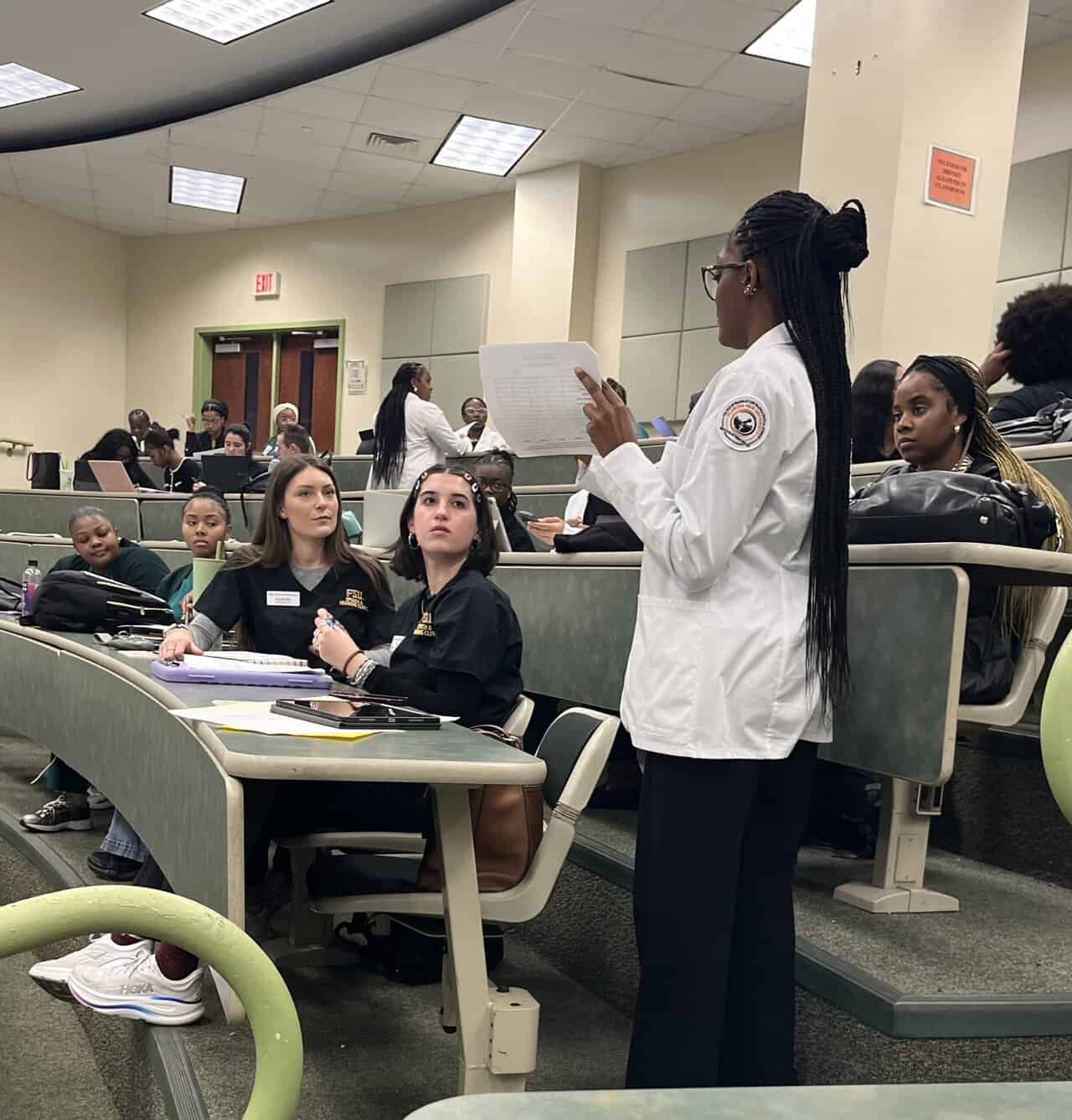
Rather than keeping disciplines in separate silos, students work in small groups alongside peers in physical therapy, occupational therapy, social work, nursing, and pharmacy. Through collaborative case studies designed to mimic real clinical environments, they practice team-based and patient-centered care and gain insight into how each discipline contributes to treatment.
For first-year graduate students, the focus was centered on understanding professional roles and responsibilities. Many students entering the event had limited knowledge of what other positions do. This case study format allowed SCSD students to explain their scope of practice while also learning how other professionals approach patient care.
“They know what a pharmacist does, but do you really know the more in-depth details of being a pharmacist or how social work helps us?” Nimmons said. “It’s a really great way for them to practice and learn from each other.”
By placing a realistic case in front of a multidisciplinary team, the event highlighted how each profession contributes to patient-centered care. According to Nimmons, case studies are especially effective since they bring out all aspects of what is being practiced, from assessment and treatment planning to ethical decision-making and collaboration.
“It’s kind of that next step to real practice,” Nimmons said. “If you bring a diverse group like that together and it’s like ‘Tell me what you do, tell me what you did,’ you don’t really often get into the details of it. Case studies really help bring out all aspects of it.”
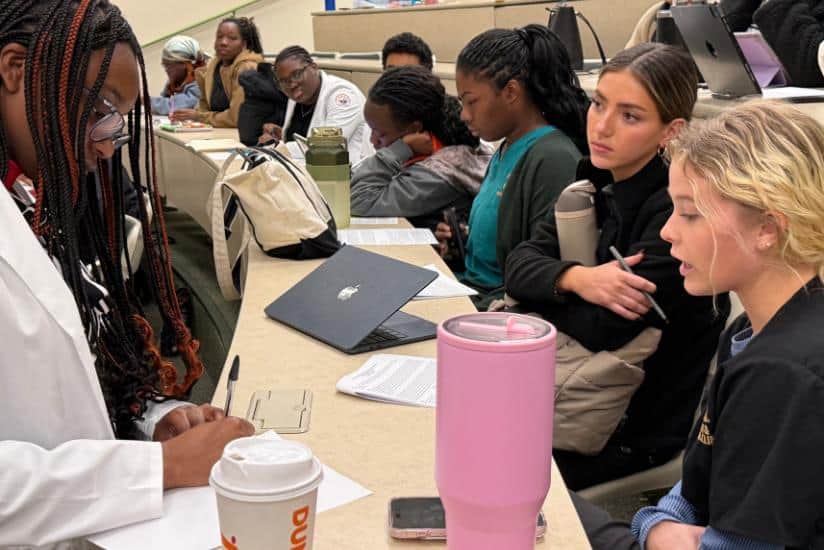 Nimmons said one of the aspects she enjoys the most is observing the interactions themselves.
“You watch a lot of team building as well, pharmacy students are typically tasked to have a leadership role, but who else steps up and becomes a leader in this group as you advocate for the best care for your patient?” Nimmons said. “That’s what’s really exciting for us as faculty. To see that kind of development within the structure of that case study and how they form that teaming.”
She added that the experience also challenges students to advocate for themselves. When discussions become complex or disagreements occur, students sometimes have to assert their clinical perspective.
The partnership continued through the end of February when second-year graduate students went to FAMU for an interprofessional education seminar focused specifically on values and ethics. Like the first-year graduate event, the seminar included a case study presented to a team of multidisciplinary professionals to encourage discussion about ethical considerations, personal values, and potential challenges.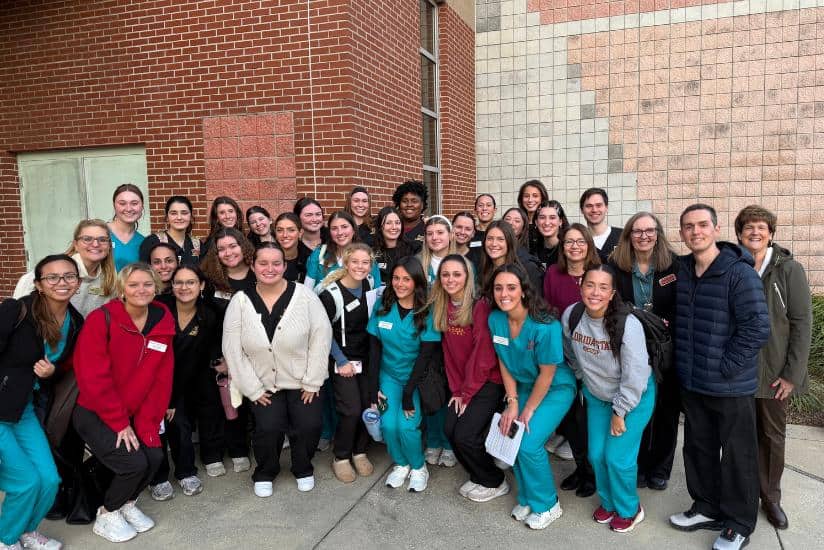
Through six years of collaboration, the program continues to evolve beyond discipline-specific training toward more interprofessional communication and shared practice. For students, the experience not only clarifies roles and responsibilities but also emphasizes the importance of collaboration in patient-centered care.
“I just see this really expanding exponentially with our FSU Health initiative that we have coming on,” Nimmons said. “I think that’s really the exciting thing for us to look forward to.”