
Florida State University School of Communication Sciences & Disorders (SCSD) doctoral student Ashley Ippolito had her manuscript, “Children’s written morphology skills demonstrated in third grade narrative responses,” published in Reading and Writing Quarterly: Overcoming Learning Difficulties, a peer-reviewed journal focused on literacy education from preschool through 12th grade.
The journal publishes research aimed at improving reading and writing instruction for students who experience learning difficulties and are considered at risk. Its scope includes the causes, prevention, evaluation, and remediation of literacy challenges in both general and special education settings.
“Professionally, it feels meaningful to have this work published in a journal that focuses on learning difficulties and applied literary research,” Ippolito said. “The journal values work that connects theory, research, and practice, which really matches how I approach my research and my clinical work.”
Ippolito’s research explores how students demonstrate morphological knowledge in authentic writing rather than through isolated assessment tasks. Morphology refers to the structure of words, including prefixes, suffixes, and root words, and is a key component of literacy development.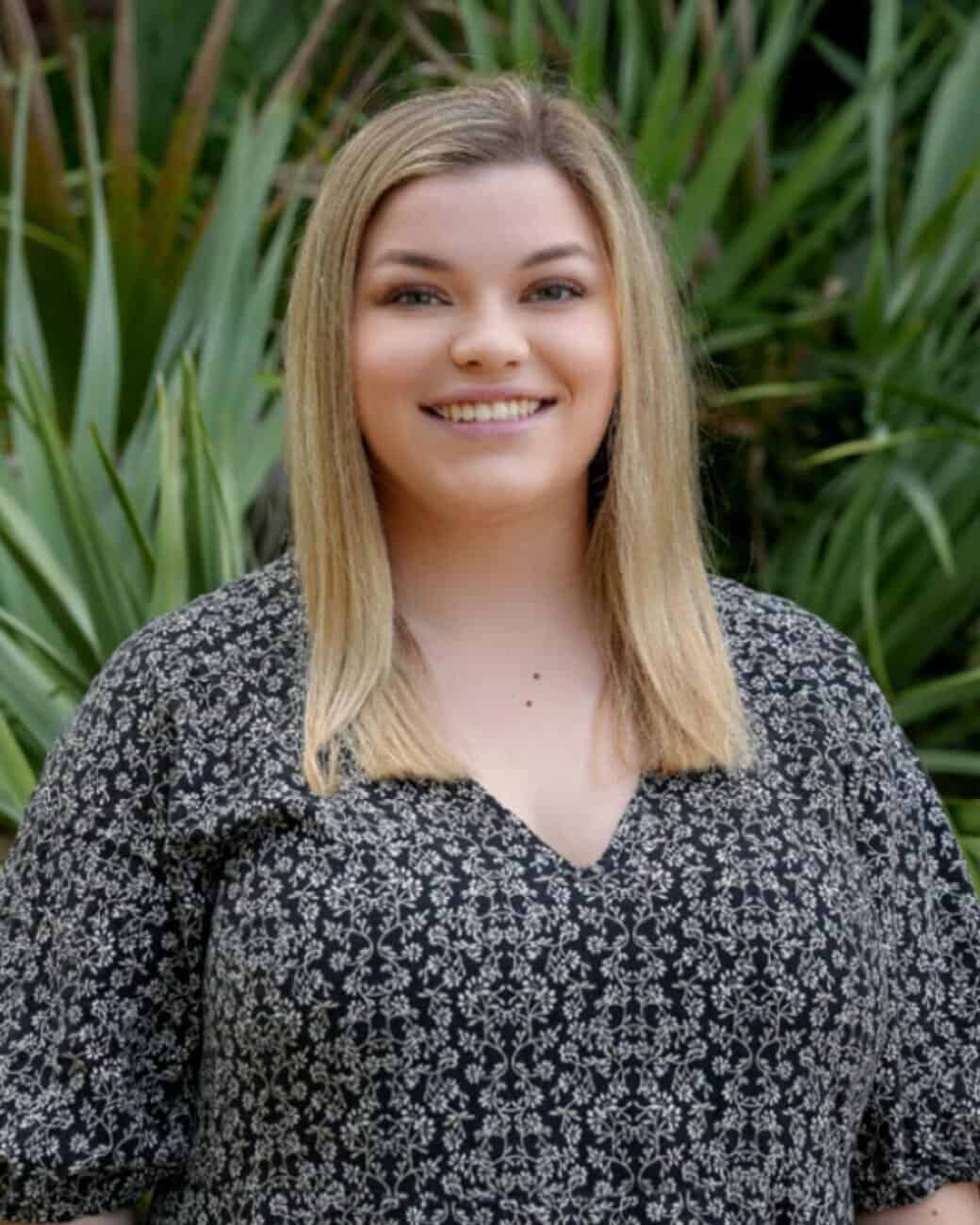
“A lot of what we know about morphology comes from structured tasks, but those tasks don’t always tell us what students do when they’re actually generating language on their own,” Ippolito said. “Writing gives us access to something more integrated and more authentic.”
Ippolito stated that the goal of the study was to better understand how morphological knowledge shows up in authentic writing and whether traditional assessments are really capturing that full picture.
The study analyzed students’ narrative writing to identify the types of morphemes they produced and the developmental complexity of those forms. Those features were then compared to performance across a range of morphological awareness subtests. According to Ippolito, the relationship between assessment scores and writing was not very apparent.
“One of the things that really stood out was how rarely later-developing morphemes showed up in writing,” Ippolito said. “But when they did, they tended to show up in the work of students who had a much stronger overall grasp of morphology — even if that wasn’t obvious on a single test.”
This finding highlights a limitation of relying solely on traditional assessments. Some students demonstrated linguistic strengths in their writing that were not fully captured by formal testing, suggesting that writing samples can reveal dimensions of language knowledge that are otherwise overlooked.
“That finding really stood out to me because it highlights a gap between what students can demonstrate in testing situations and what they can do when they are writing more freely,” Ippolito said.
Ippolito explains how his findings encourage educators and clinicians to view student writing as more than a measure of spelling or organization. Instructionally, the study supports embedding morphology within reading and writing activities rather than teaching it as a standalone skill. From an assessment standpoint, the findings reinforce the value of using writing samples with formal measures to gain a more complete picture of student language skills.
The manuscript laid the groundwork for Ippolito’s current work with ScriptToolKit, a suite of tools designed to make language sample analysis more accessible outside of research settings. The idea emerged directly from the challenges she encountered during the study.
“I realized how hard it was to move from a raw writing sample to something that actually tells you something interpretable about language,” Ippolito said. “ScriptToolKit is really about making that process possible without losing the theoretical grounding.”
ScriptToolKit includes ScriptPrep, which prepares writing samples for analysis; ScriptSense, which examines morphological, lexical, and syntactic features; and ScriptGuide, which supports interpretation and instructional decision-making.
“Together, ScriptToolKit reflects the same core idea that motivated this manuscript,” Ippolito said. “To really understand language development, we need to look at how students language in context and we need tools that make that kind of analysis accessible and scalable.”
Ippolito’s paper serves as a starting point for her work, and shows her contributions to ongoing efforts to better understand how children’s language knowledge is reflected in narrative writing.
To access the manuscript, click the link: https://www.tandfonline.com/doi/full/10.1080/10573569.2026.2625242