
The 2026 CCI AI Research Summit “Human at the Center” brought together Florida State University faculty, researchers and students on Friday, October 23, at the Turnbull Conference Center to explore the growing role of artificial intelligence in research, communication and everyday life.
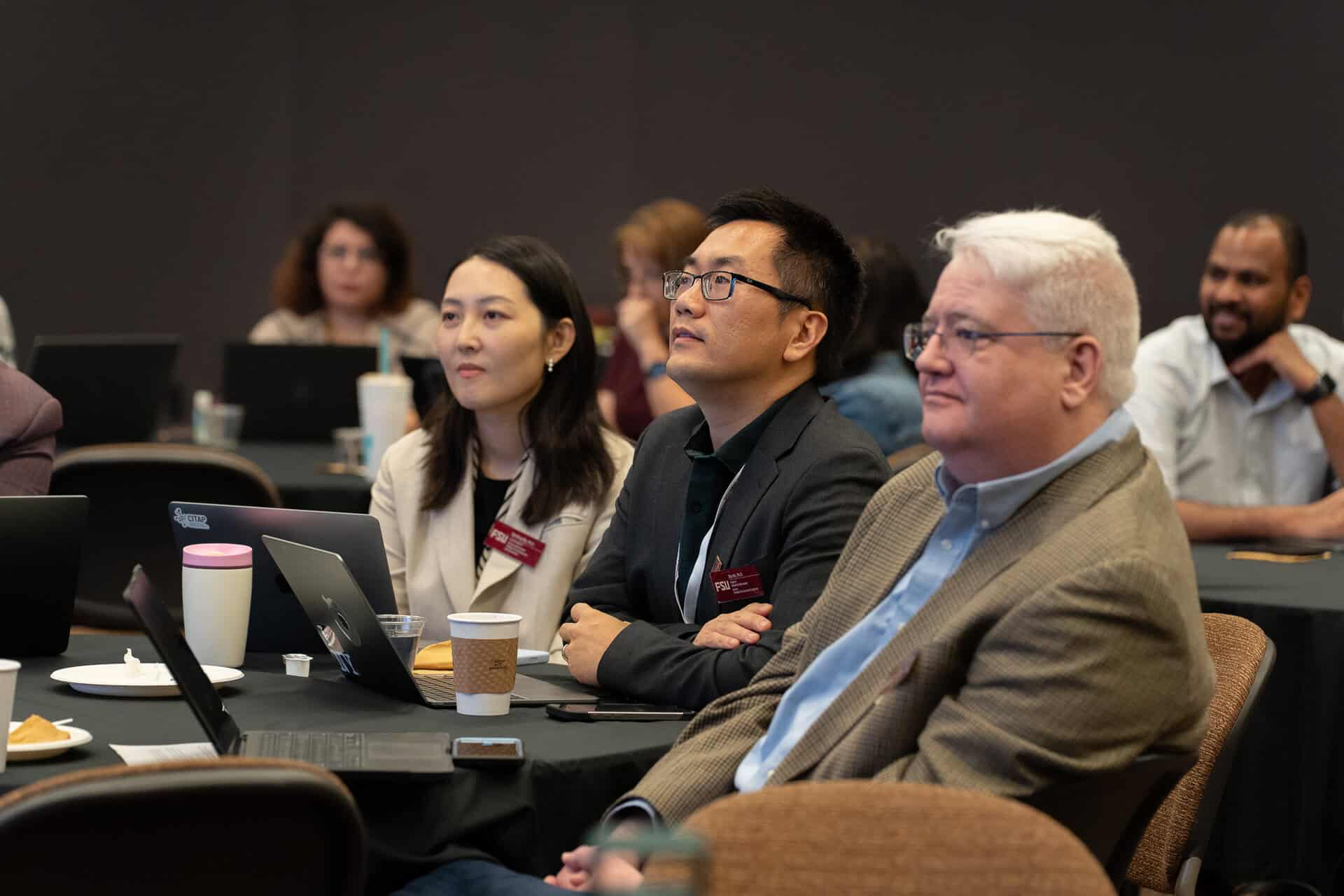
Throughout the day, attendees participated in faculty panel discussions, technology competitions and a research poster competition, creating opportunities to learn about AI-related projects and exchange ideas. The three panels covered a range of topics, from AI’s applications in healthcare to human-AI interaction and the changing information landscape.
The first panel, “AI in Health Communications and Clinical Contexts,” was moderated by Dr. Carla Wood and featured Drs. Balu Bhasuran, Zhe He, Mia Lustria, Andrea Burton-Hulsey, Rachel Bailey and Wendi Cannon.
They discussed AI applications in healthcare research and patient care, including analyzing medical records, improving radiology workflows, supporting people with speech disabilities, and developing personalized health interventions. Panelists also emphasized the importance of accuracy, privacy, and human involvement in healthcare decisions.
The second panel, “Human-AI Interaction and Communication”,” was moderated by Dr. Chris Hinnant and featured Drs. Qunfang Wu, Pengfei Zhao, Ruosi Shao, Dawn Sowers, Steve McDowell. The session explored how people interact and communicate with AI, highlighting the importance of developing technology that is understandable, useful, and responsive to human needs.
The last panel, “AI and the Changing Information Landscape”, was moderated by Dr. Marcia Mardis and featured Drs. Margaret Sullivan, Seul Lee, Subhasree Sengupta, Emily Saras, Paul Marty, and Greater Tallahassee Chamber of Commerce Eddie Gonzalez Loumiet.
The discussion addressed how researchers can incorporate AI into their work while protecting sensitive information and following university and organizational policies. Speakers also highlighted resources available to faculty and students, including AI consultations, training and research support, while emphasizing responsible AI use and the importance of maintaining accurate and reproductive research.
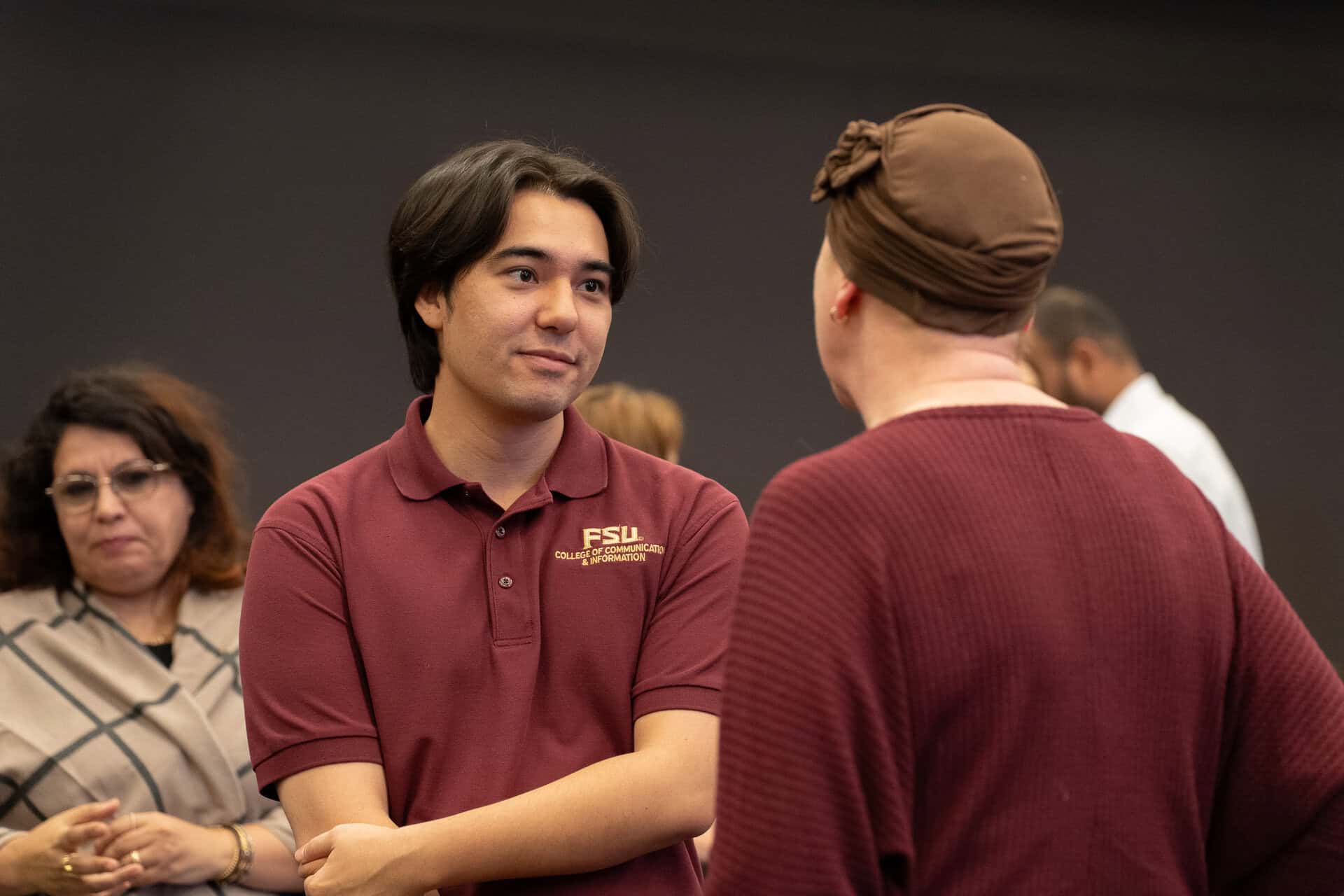
The summit also included a doctoral poster competition where doctoral students and candidates had the opportunity to present their research projects and proposals.
Main topics included: “Needle Exposure, Stigma, and Overdose Risk Among Public Library Patrons” by Jonah Hancock, winner of the competition; “Classical Educators’ Experiences with Disability Inclusion: Preliminary Findings from a National Mixed-Methods Study” by Timea Hyatt, Jessica Kirkland, and Dr. Carla Wood; “Exploring Human Motivations in the use of Generative AI for Artistic Creation” by Tursynay (Tori) Alikhanova & Sooyeon Park.
The event highlighted AI technologies developed by students and staff through step-by-step demonstrations. Courtney Stokes, a sophomore majoring in Information Technology, was awarded 500 dollars for travel opportunities for her VELA project, a dashboard agent designed to update data from a spreadsheet with over 2500 names.
The 2026 CCI AI Research Summit highlighted the wide-ranging ways artificial intelligence is shaping research, communication and healthcare. Through panel discussions, competitions and research presentations, the event gave faculty, students and researchers an opportunity to share ideas, explore new developments, and discuss the importance of using AI responsibly.