
This past December, three School of Information (iSchool) researchers presented at the 2025 International Conference on Information Systems (ICIS) in Nashville, Tennessee. ICIS annually invites information system researchers worldwide to discuss relevant research on innovative technologies, specifically the rapid advancement of artificial intelligence (AI) under the 2025 theme, “Achieving Digital Integration in the Age of AI.” Among the iSchool’s attending researchers was Dr. Shuyuan Metcalfe and doctoral students Ghazal Hussain and Yue “Luna” Liu, who presented their findings on how deception has evolved alongside digital technologies.
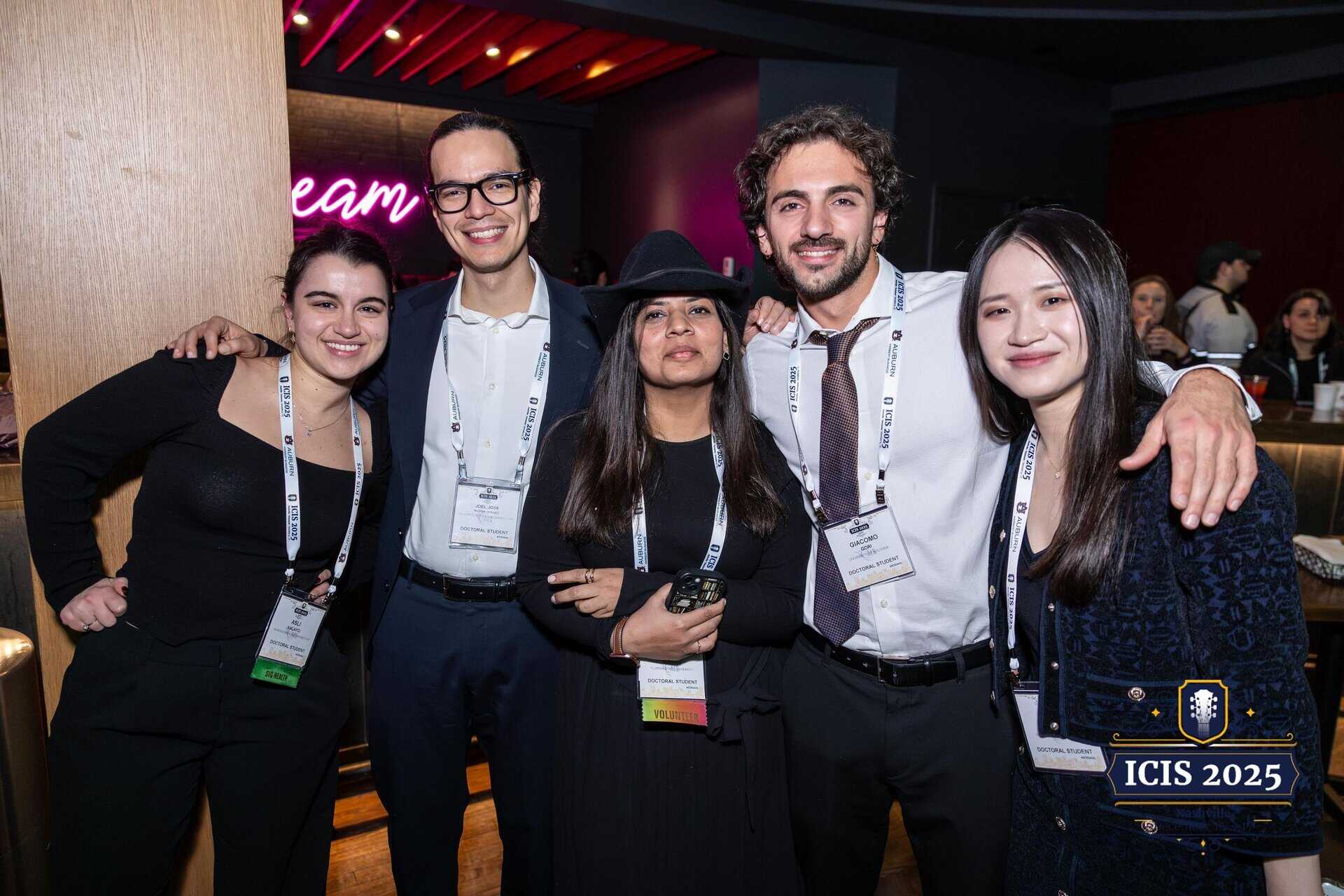 “In today’s digital world, information can be easily manipulated deliberately or misinterpreted unintentionally, making the study of deception more important than ever,” said Shuyuan.
A significant part of their paper, “Synthetic lies, digital truths: A systematic review of computer-mediated deception research in the era of AI and deepfakes,” focused on two decades of online deception research from Information Systems journals and conference proceedings. After reviewing 57 peer-reviewed studies published between 2004 and 2024, Shuyuan, Hussain, and Liu identified a clear shift from traditional, face-to-face deception to computer-mediated and increasingly multimodal forms of deception, including deepfakes through AI.
“As generative AI increasingly blurs the boundary between authentic and synthetic information, the effectiveness of traditional deception cues and our reliance on them comes into question,” said Liu.
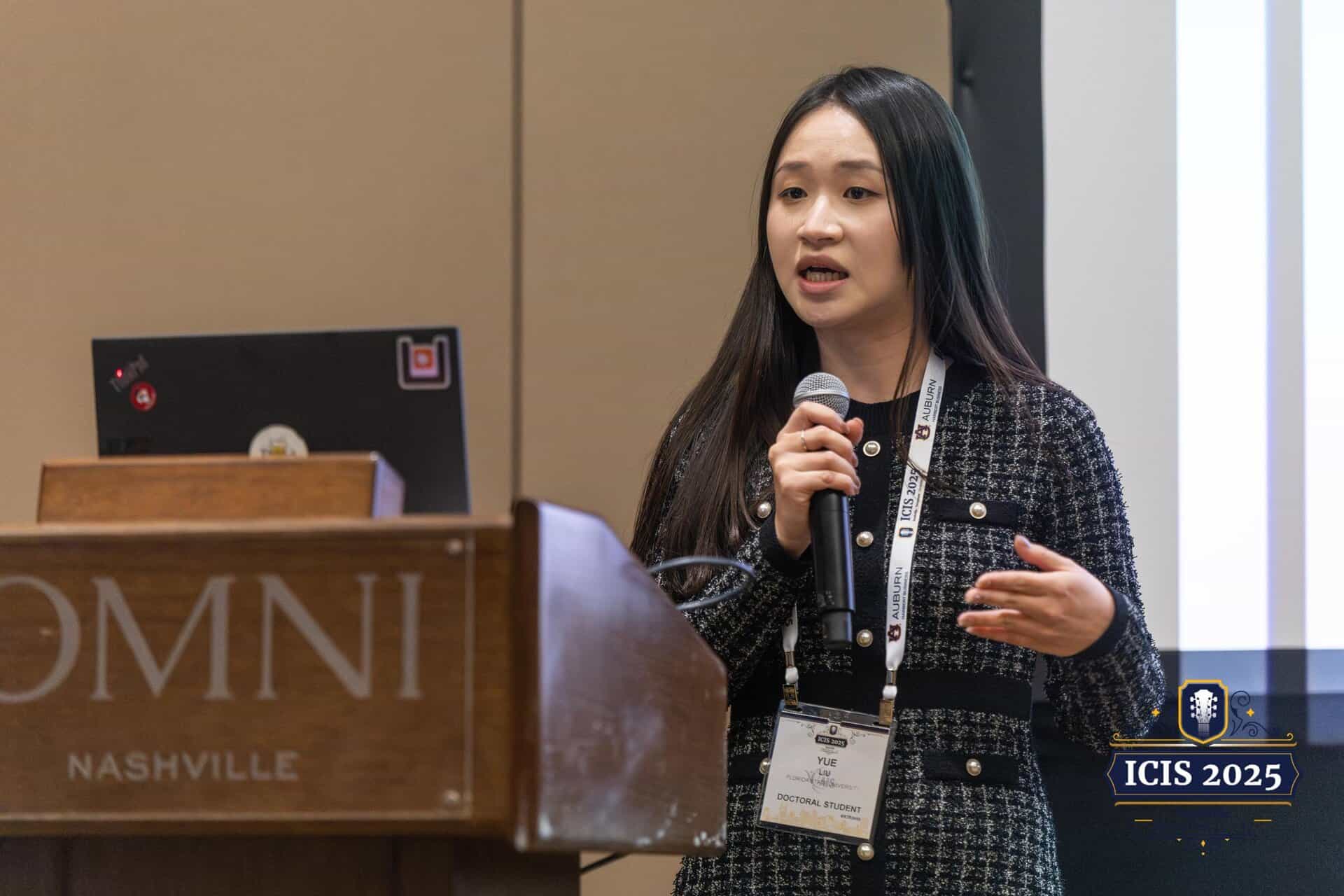 To address these emerging challenges, Metcalfe, Liu, and Hussain proposed a new Multimodal Deception Theory, analyzing numerous variables – physiological signs, language patterns, and behavioral cues – to better understand deception in environments where humans and AI systems interact and collaborate. The proposed theory aims to guide future research on deepfakes and digital deception, helping scholars and practitioners respond to increasingly complex and AI-driven communication landscapes. By engaging with the ICIS community about these challenges, Metcalfe, Liu, and Hussain reaffirmed their urgency to research this topic.
“Our presentation and subsequent discussions provided valuable feedback and reinforced the relevance of the work in understanding how AI is reshaping notions of truth, trust, and detection in digital communication. The work was highly praised, and the numerous questions from scholars led to extended discussions and the generation of unique ideas,” said Hussain.
The research team is thankful for the support of the FSU CRC SEED Grant (2024-2026) and the 2024-2025 Fulbright Scholar Award at the University of Bologna, Italy, which enabled this collaborative research effort.
For more on this on ICIS and the research presented, please visit https://aisel.aisnet.org/icis2025/cyb_security/cyb_security/17/.