
Dr. Elizabeth Madden, a School of Communication Science and Disorders (SCSD) associate professor, is a co-Investigator (co-I) on a newly awarded R56 grant from the National Institute on Deafness and Other Communication Disorders. The research project, “Evidence-Based Modeling Approaches to Customizing Treatments for Acquired Dyslexia,” involves an interdisciplinary, multi-site team that includes Principal Investigator William Graves (Rutgers University) and co-Investigators Olga Boukrina (Kessler Foundation), Argye Hillis (Johns Hopkins University), and David Plaut (Carnegie Mellon University).
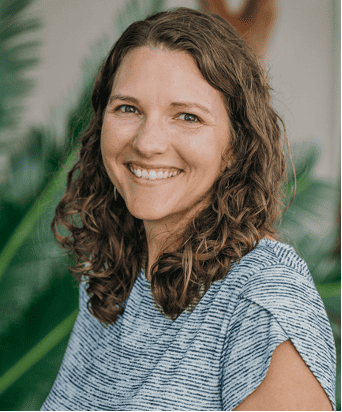 “It is definitely unique for me to be partnering with people who are not speech-language pathologists,” Madden said. “We’re bringing a lot of different professionals in to add to this computational modeling piece and combine different treatment approaches.”
Their research aims to develop neural network computational models that simulate reading impairment after stroke and then use those models to predict which reading intervention will work best for stroke survivors who have acquired language impairment (aphasia) and reading impairment (alexia).
“The idea we’re testing out right now is trying to save therapist time and the clients from going through something that really isn’t the best fit for them,” Madden said.
Based on participants’ reading testing and the neural network model predictions, participants will be assigned to one of two reading interventions. Therapy will consist of 120 hours delivered over two, six-week cycles with some participants receiving both treatments and others only receiving one treatment.
The findings from this research, combining expertise in speech-language pathology, neuroscience, and computational modeling, could lay the groundwork for future neural network-based language treatments, further our understanding of the cognitive basis of reading, and improve communication and quality of life for stroke survivors with aphasia and alexia.