
On April 1 students showcased months of work and research at the 26th Annual Undergraduate Research Symposium, filling the room with curiosity and ambition. Students from the College of Communication and Information (CCI), Saheli Brennan and Da’Mya Bray, presented their work, making points on how research can not only be based off STEM, as one can learn about history, english or any subject they are passionate about.
Motivated by personal reasons, Brennan’s research titled “Aspects of Life Impacted by SCSDs in Early Elementary Students” focused on how speech-sound disorders impact every area of childhood, specializing in morphological awareness processing, and social-emotional wellbeing and development.
“I wanted to help students and children feel more confident in themselves. Growing up, my family members had some speech sound disorders, and I saw how that impacted their confidence,” Brennan said. “It impacted the efficacy of the treatment that they were receiving, and I realized that this was more of my passion. I think that research is the first block of social change.”
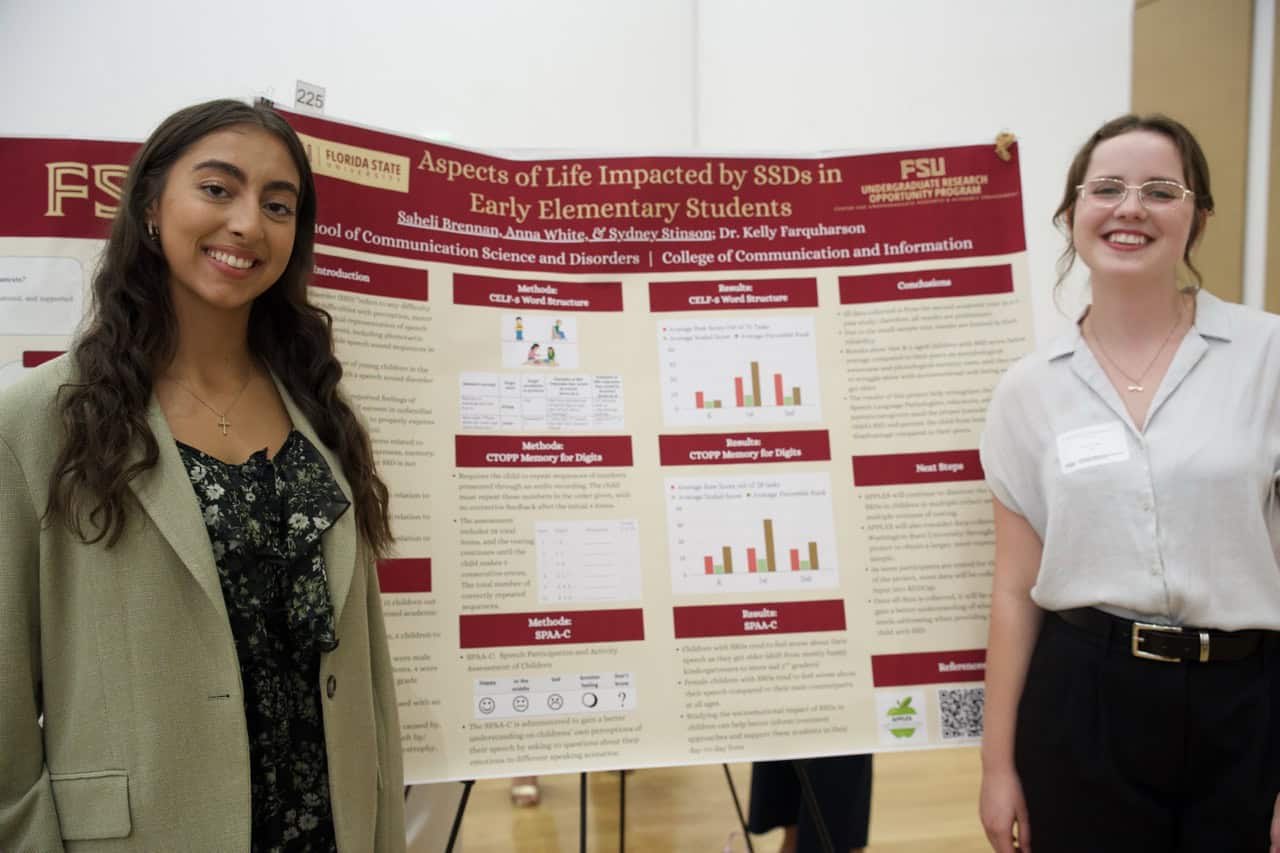
Her research examined children’s phonological awareness, using the Clinical Evaluation of Learning Fundamentals children’s phonological processing skills, using the Comprehensive Test of Phonological Processing (CTOPP), and how their speech affects their emotions, using Speech Participation and Activity Assessment of Children (SPAA-C). It looked at how these skills and feelings change as children progress through early grade levels.
Her results found that children showed slight improvement in morphological and phonological skills from kindergarten levels to first grade, with a narrowing gap between those with differing speech-sound capabilities weaker and stronger speech-sound awareness. However, this progress levels off or slightly declines by second grade compared to peers without speech-sound disorders. At the same time, as children get older, they report more negative feelings about their speech, suggesting increasing emotional awareness or social impact.
Beyond developmental science, Da’Mya Bray’s research was rooted in history and community collaboration. Her project, “Sounding Out Sistrunk: A Historical Listening & Archival Collaboration with OTOWN Preserving Community Memory as a Legacy of Place”, explored findings about Sistrunk, an African-American community based in Fort Lauderdale, Florida.
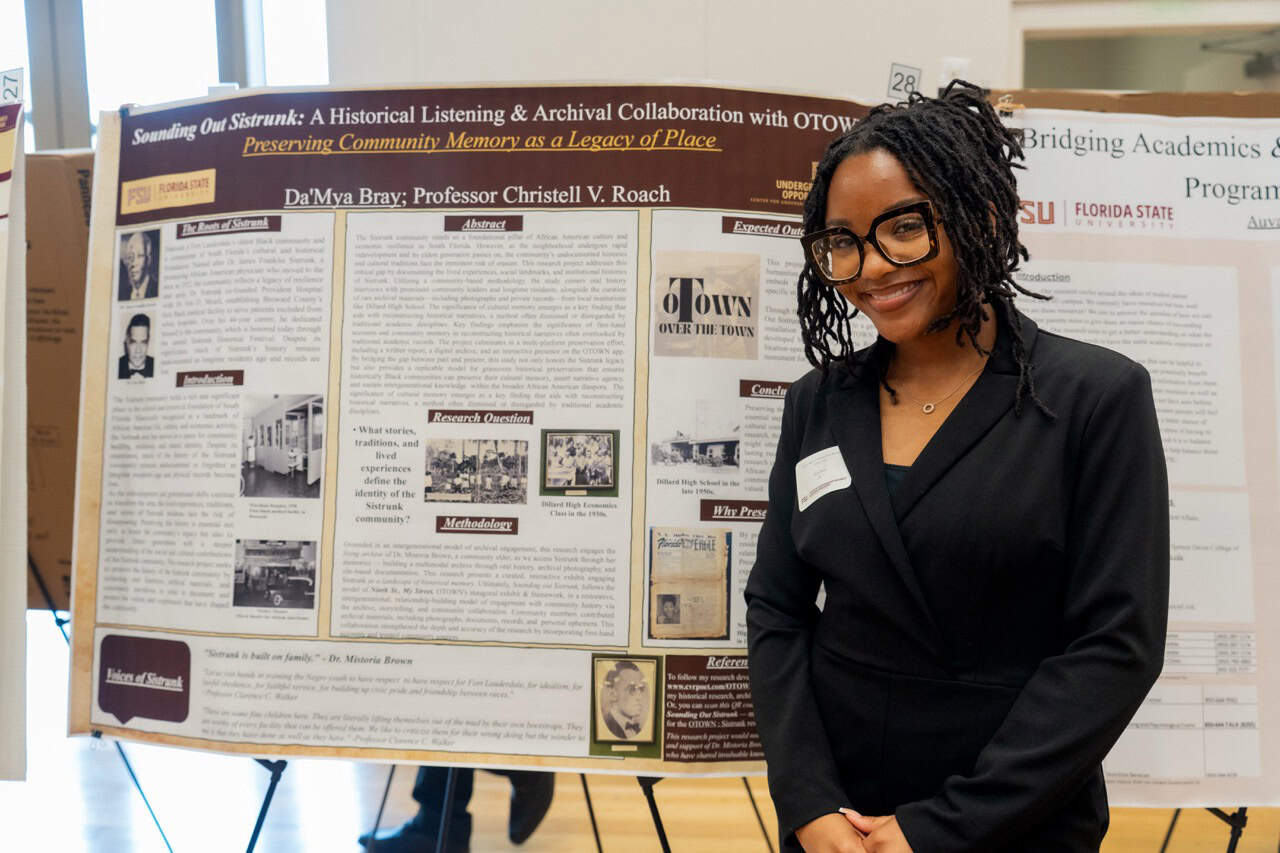 Bray highlights, “Being able to engage with my community and talk to different community leaders and residents was such a rewarding experience because I was able to get their firsthand accounts and learn about what it was like living in Sistrunk during the 40s, 50s, or the 60s, learn about their experience and how it all came to be.”
By choosing a history-based topic, Bray was led by what stories, traditions, and lived experience defined the identity of the Sistrunk community to produce her findings: Sistrunk’s identity is deeply rooted in family, community collaboration, and shared history, with many individuals contributing to its development. Additionally, her project found that preserving and sharing these stories strengthens community pride and awareness, especially for future generations.
Bray added, “Professor Christell Roach and community leader Dr. Mistoria Brown were two individuals who played a huge role in guiding me throughout my research. Both made a huge impact throughout the process.”
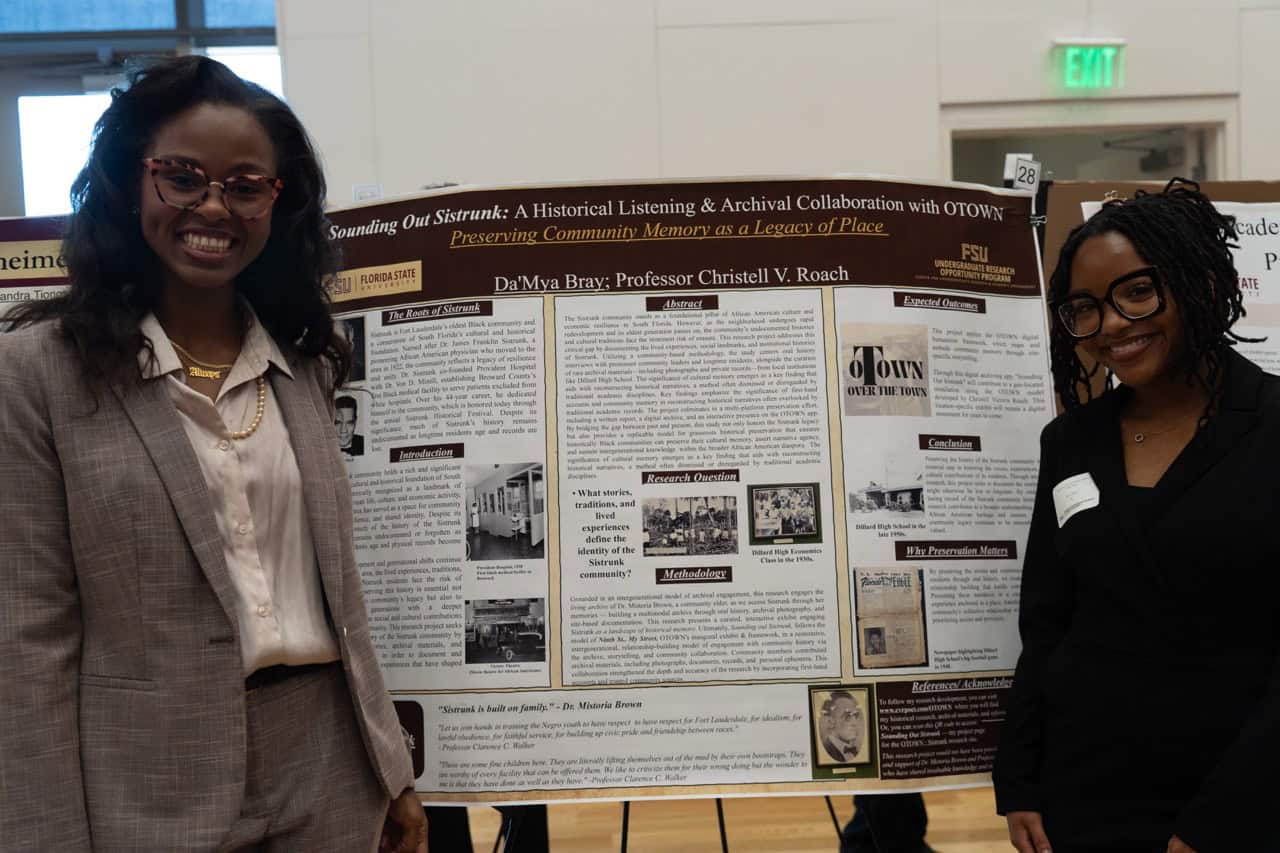 Bray’s research mentor, Professor Christell Roach, explains her approach to guiding student researchers, saying, “I think my role is just to be there with the finished project. I go by the idea that anything’s possible, so trial and error. I encourage the discomfort, because that’s where you start to find things. I’m going to be like the bumpers in the bowling alley along the way, and that’s kind of innate to the research process.”
Whether through examining early language development or exploring community histories, these students’ work highlights the College of Communication and Information’s belief that research should extend beyond the classroom.