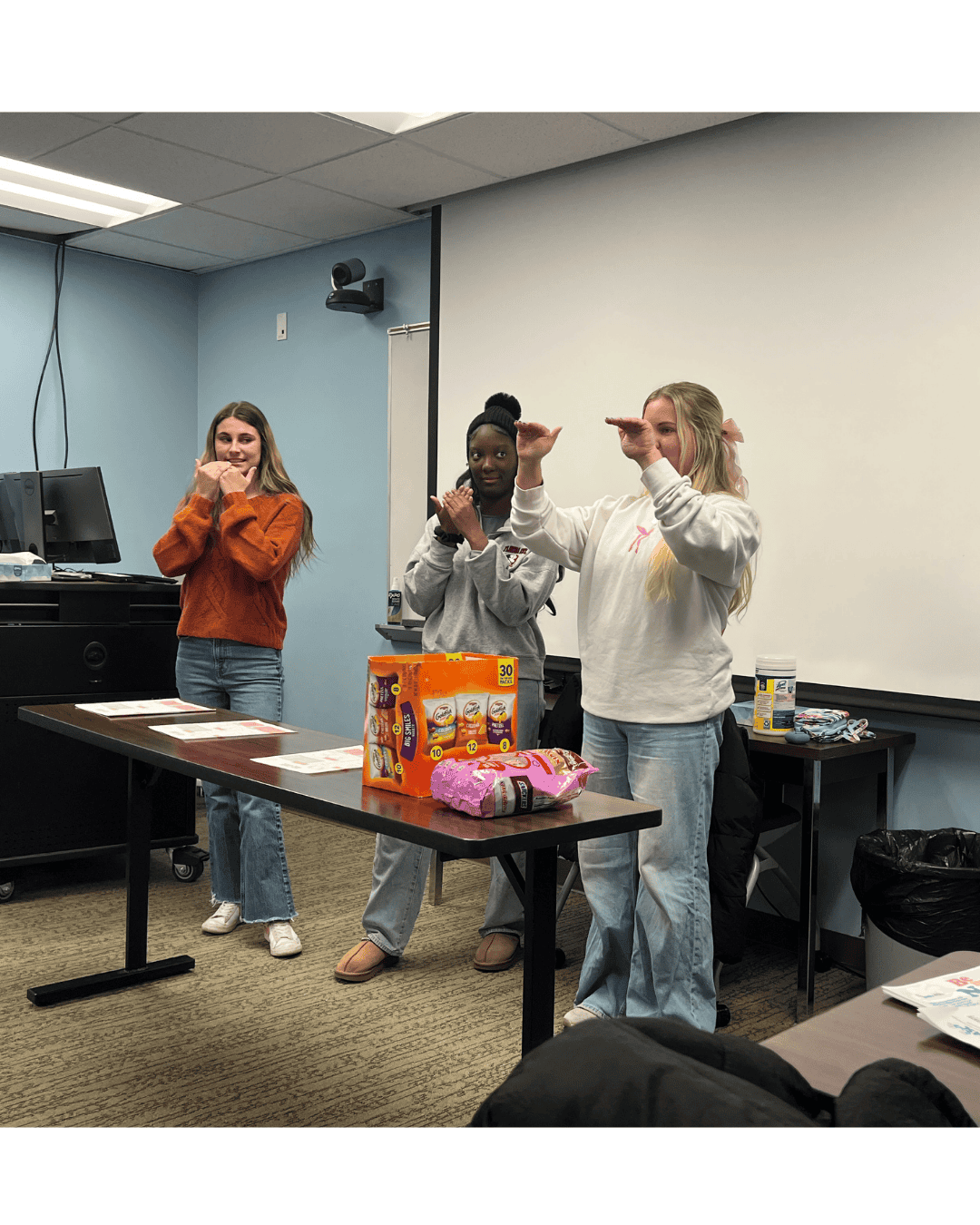
 Families of Deaf and hard-of-hearing (DHH) children have shown dedication to learning American Sign Language (ASL) through the Family and Friends ASL Class series, hosted by the Deaf and Hard of Hearing American Sign Language Educational Outreach Program. This series is more than just a language course, but it is a path to connection, community, and empowerment for both children and their families.
Led by Professors in the School of Communication Science and Disorders, Drs. Kristen Guynes and Casey Guynes, the program equips families with the skills to communicate effectively with their DHH children from the very start. The inspiration behind the series stems from a critical need to ensure that DHH children have early and meaningful access to language.
The inspiration behind the series stems from a critical need to ensure that DHH children have early and meaningful access to language.
“Within mainstream society, there is a widespread misconception that the utilization of sign language could hinder a Deaf or hard-of-hearing (DHH) child’s ability to maximize their spoken language skills. The underlying notion is that learning to listen, through hearing technology, and speak is such a challenging task for a Deaf child that they will inherently take to visual language more easily. Given what we know about language development and bilingualism, that is exactly what we do want—for every child to have uninhibited access to at least one naturally developing native language (whether it be spoken or signed),” Guynes said.
Research shows that over 95% of Deaf children are born to hearing parents, many of whom are unfamiliar with American Sign Language (ASL). Often, families are encouraged to prioritize spoken language first, instead of exposing themselves to ASL. This delay can have negative long-term effects in the future.
“Sadly, it is often not until those optimal spoken language outcomes are not realized that families begin to consider sign language for their Deaf and hard-of-hearing children. This phenomenon of language deprivation leads to so many DHH children entering school with such a significant language gap that it can be almost impossible to catch up,” Guynes said.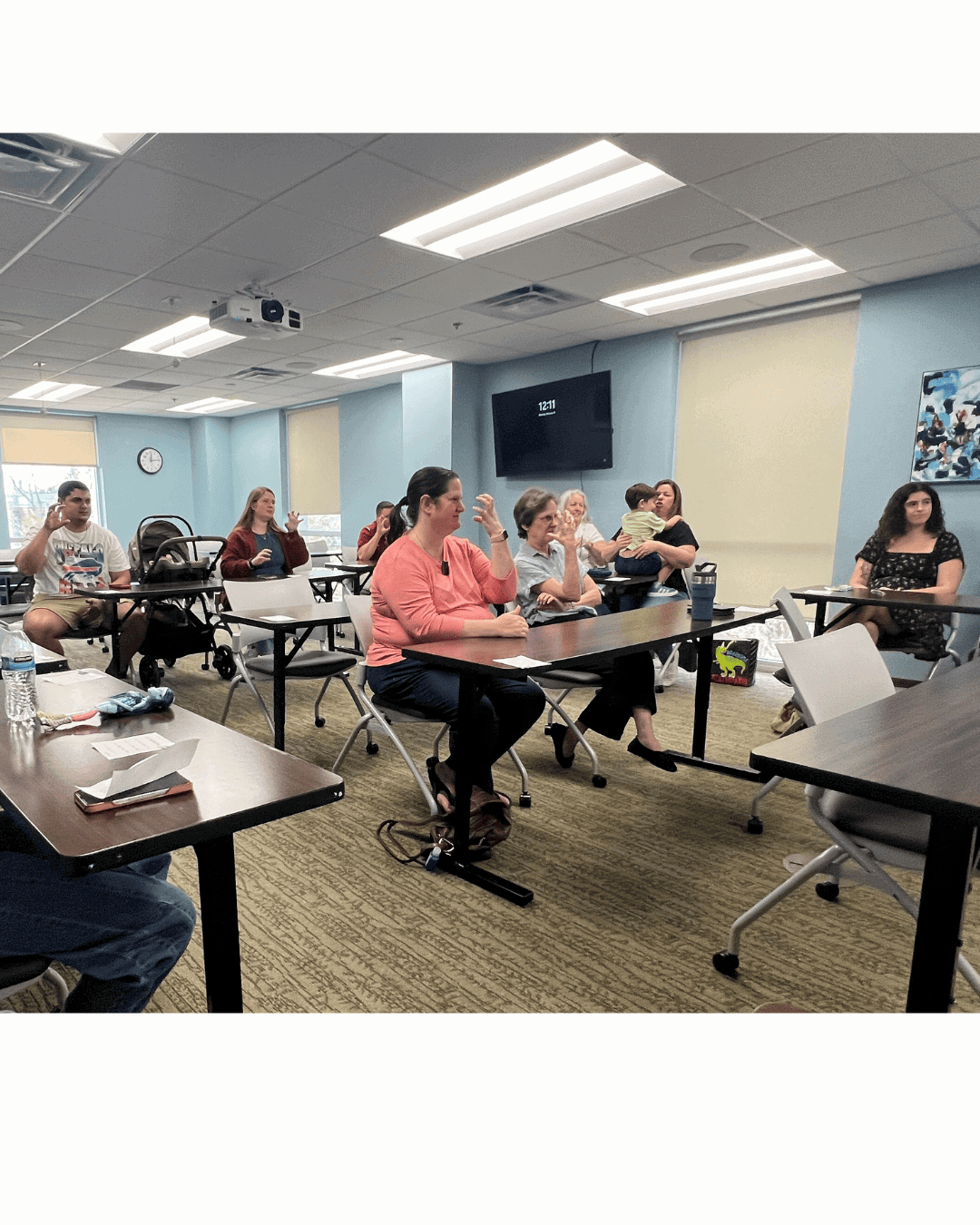
This ASL series was designed to address this gap early, which gave families the tools they needed to communicate effectively from the start.
“Essentially, if a child is going to, or even potentially, utilize sign language, the earlier they are exposed to it and the more language models they have, the stronger foundation they will have for native proficiency,” Guynes emphasized.
The program is supported by a dedicated team of student leaders who play a vital role in its success. ASL class sessions are led by Ananda Eaton, an FSU graduate and current Ph.D. student; Brianna Donaldson, an FSU graduate; and FSU undergraduate students Faith Collins, Hope Garrett, and Alexia Lambert. Their leadership helps guide families through the learning process and creates an engaging and supportive classroom environment.
In addition, FSU undergraduate students Grace LeCroy, Keira Eckhardt, Jackie Tinoco, and Rachel Stramanino organize and lead children’s activities during the sessions. These activities provide a safe and engaging space for Deaf and hard-of-hearing children—and their siblings—allowing parents to fully participate in the ASL classes without the need for additional childcare.
For many families, learning ASL has become a shared journey. Parents and children grow together in their communication skills, building stronger relationships along the way.
“When parents decide they are ready to embark on the journey of using visual language with their DHH children, they are often learning it right alongside them,” Guynes said.
Even if parents are non-native signers, when children have consistent exposure at home and interactions with signers, this can support children in developing the native-level skills they need.
Moments throughout the series have reinforced how meaningful this initiative is. Seeing families begin signing early is encouraging, and research shows that ASL not only does not hinder spoken language development but can actually support and improve it.
Beyond language, the program fosters a sense of community. The class series creates a space where both children and parents can connect with others who understand their journey. For DHH children, exposure to peers for social skill development are critical. Parents also have the chance to connect with other parents for a source of support.
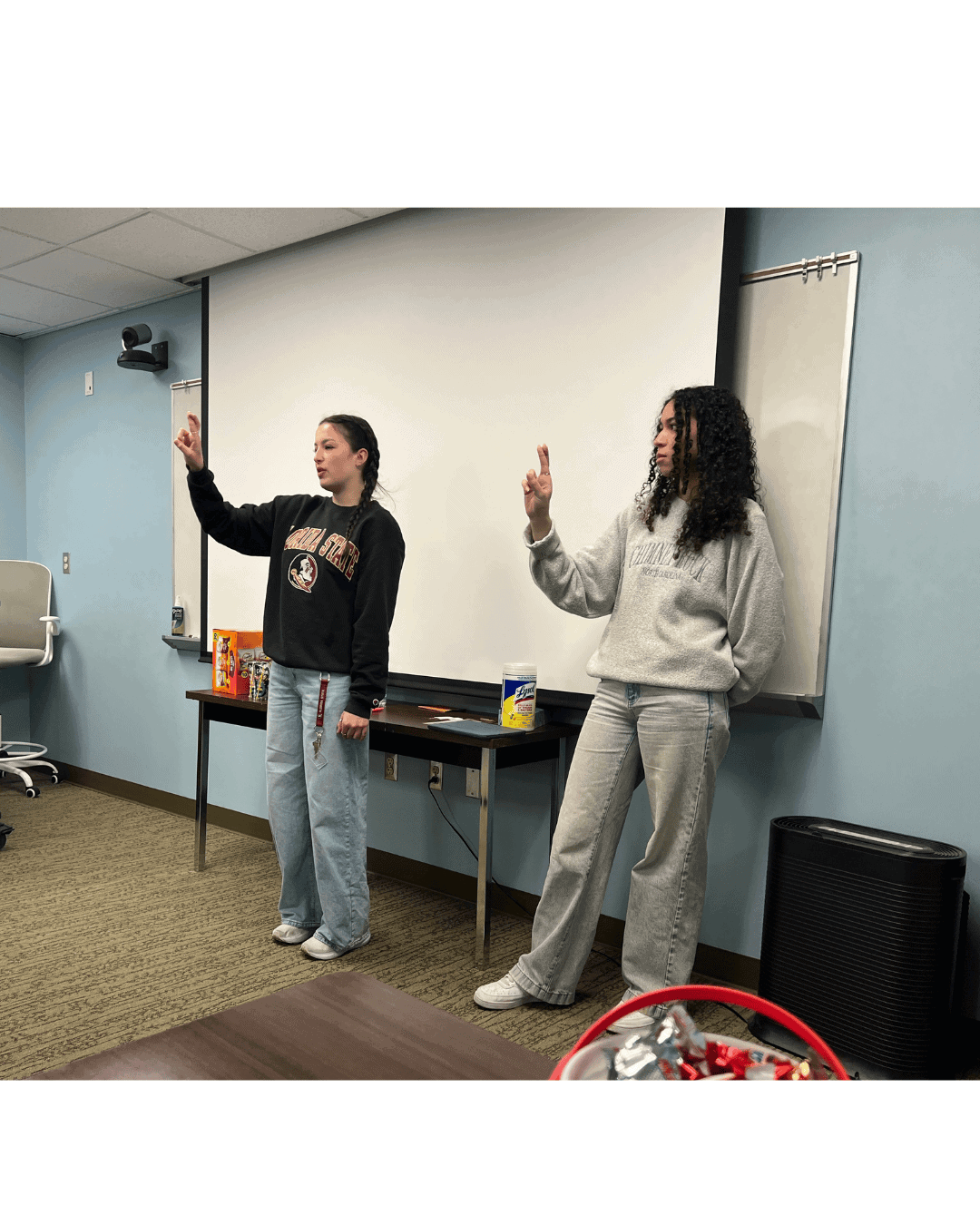 Looking ahead, the long-term vision for this program is to continue impacting people through access and engagement.
“As the DHH/ASL Outreach Program has evolved, we now offer a regular rotation of classes and programs, with a sign language session being scheduled for every Fall and Spring semester moving forward. We also offer language and literacy groups, social events, and community workshops on a regular basis,” Guynes said.
This initiative has been a rewarding experience for Drs. Kristen Guynes and Casey Guynes, and they expressed how playing a part in many families’ journeys and bringing members of the Deaf community was an honor.
Ultimately, the “Family and Friends ASL Class” series represents more than education, but it represents empowerment. By providing the tools to families to effectively communicate, it helps ensure that DHH children grow up with access to language, community, and connection.