
iSchool Professor Dr. Zhe He, Director of the Institute for Successful Longevity (ISL) and Director of the Biostatistics, Informatics, and Research Design (BIRD) Program for the UF–FSU Clinical and Translational Science Award (CTSA) Hub, has been appointed as a standing member of the Clinical Informatics and Digital Health (CIDH) Study Section at the National Institutes of Health (NIH) Center for Scientific Review. His four-year term runs from July 2026 through June 2030.
The appointment places He among experts responsible for evaluating NIH research grant applications that shape the future of healthcare innovation.
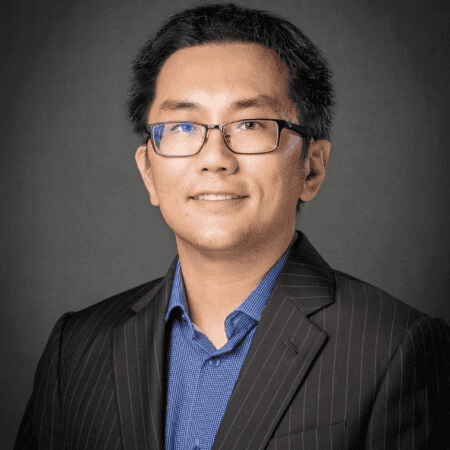
“It is truly an honor to serve on the NIH Clinical Informatics and Digital Health Study Section,” He said. “The NIH peer review system is one of the cornerstones of biomedical research in the United States. I have previously served on NIH study sections many times as an ad hoc member. This appointment represents both recognition and responsibility, and I look forward to helping identify innovative research that can improve healthcare and advance science.”
Driven by the simple question on how to use data and artificial intelligence to help people make better health decisions, He’s research spans biomedical informatics, artificial intelligence, machine learning, and digital health. His work has included developing AI algorithms to support clinical decision-making, improving health prediction, and analyzing real-world healthcare data.
More recently, he has expanded his research to patient-centered AI—technologies designed to help patients better understand their health information, communicate with healthcare providers, and actively participate in healthcare decisions.
“Much of today’s AI focuses on supporting clinicians by improving diagnosis, predicting outcomes, or streamlining clinical workflows,” He said. “These advances are incredibly important. At the same time, I believe the next wave of healthcare AI should extend beyond clinician-facing intelligence to include patient-centered AI systems that help patients understand complex medical information and become active partners in their own care.”
He emphasizes that the future of healthcare AI depends not only on technical performance but also on trustworthiness, transparency, and human-centered design.
He believes the appointment also reflects the strength of FSU’s growing research enterprise.
“FSU has made significant investments in biomedical informatics, artificial intelligence, aging research, and clinical and translational science,” He said. “I have been fortunate to collaborate with outstanding colleagues across the University and through the UF–FSU CTSA Hub. This appointment reflects not only my work but also the collaborative research environment that FSU has built.”
Looking ahead, Dr. He hopes his appointment will inspire students and early-career researchers to pursue interdisciplinary research and scientific service.
“Stay curious, focus on solving meaningful healthcare problems, and embrace collaboration,” he said. “Some of the most important advances happen when researchers from different disciplines work together. Contributing to science isn’t only about making discoveries – it’s also about helping ensure that the best ideas receive the support they need to improve people’s lives.”