
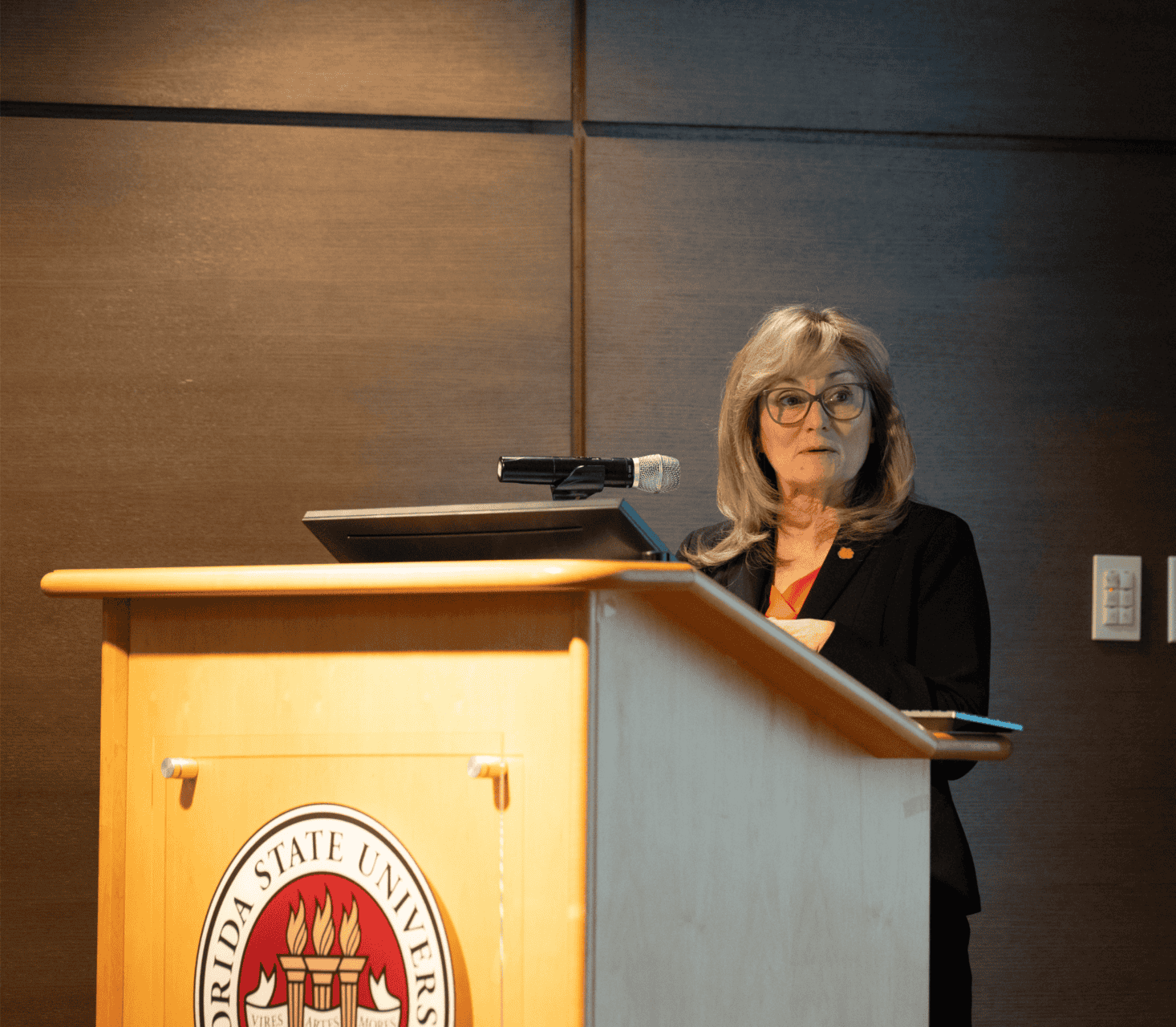
 Scholars and community partners gathered for the Building Resilience Communities: Communication, Infrastructure, & Information in Crisis Response forum to explore how crisis communication shapes preparedness, response, and recovery across industries. Developed by Dr. Elizabeth C. Ray, Dr. Marcia A. Mardis, and Dr. Eren E. Ozguven, the one-day interdisciplinary event brought together faculty and community partners to hear from scholars in crisis and risk communication. The forum was funded by the National Science Foundation (NSF) with additional support from the Institute for Museum and Library Services (IMLS), the FSU Information Institute, the FAMU-FSU Resilient Infrastructure & Disaster Response Center (RIDER, the FSU School of Information, and the FSU School of Communication.
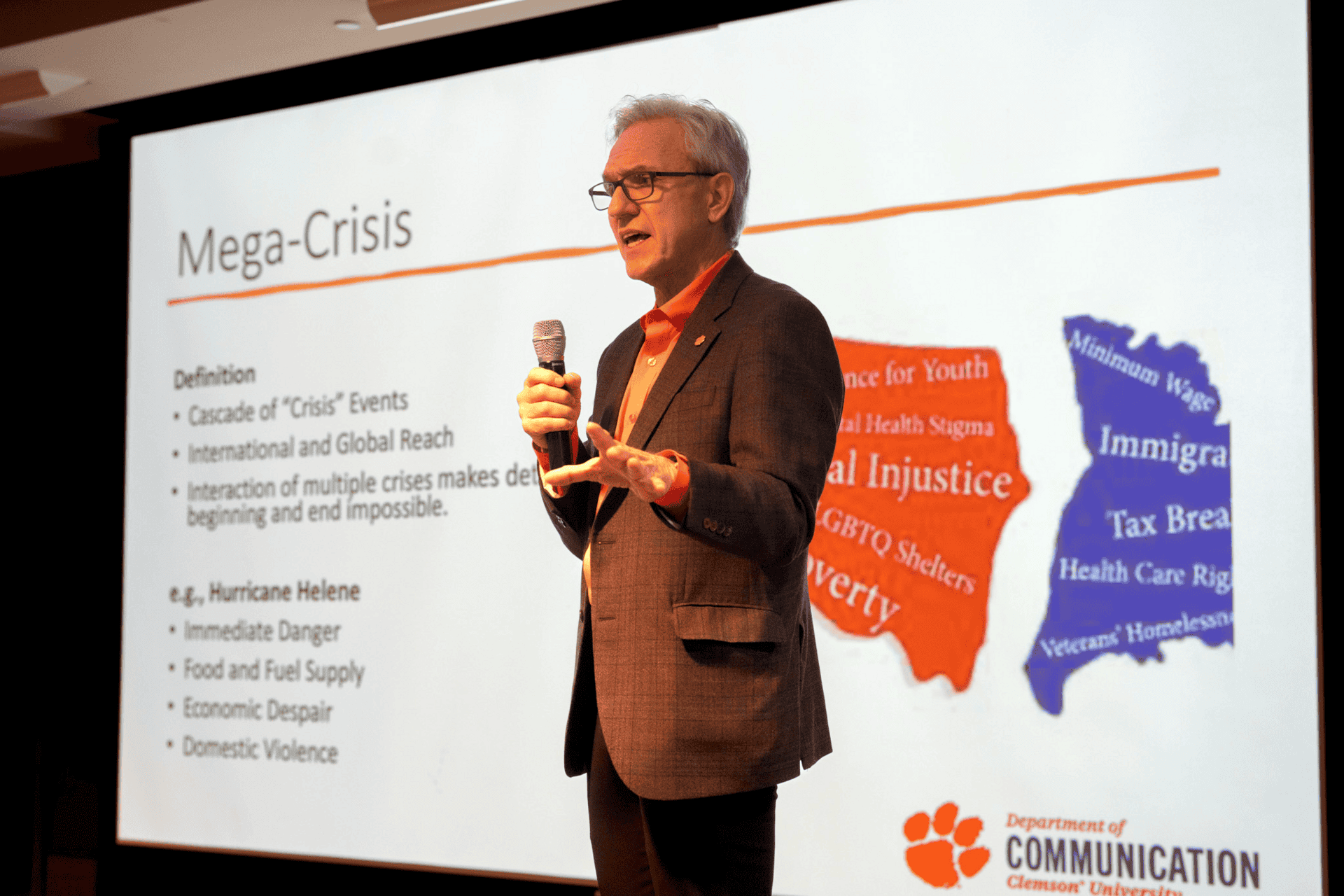 The forum took place on Jan. 29 and focused on disaster-related learning, with speakers and participants representing a wide range of researchers and practitioners. Keynote speakers, Dr. Deanna Sellnow and Dr. Timothy Sellnow, discussed complex concepts in crisis communication, such as “wicked problems,” “mega-crises,” and “mega-risk,” to show how interconnected disasters have become. They presented the IDEA Model, a crisis communication framework emphasizing trust, engagement, and actionable decision-making in critical situations. The forum also featured a series of panels and discussions from multiple perspectives, including infrastructure resilience, information access, meteorology, and community-centered response strategies.
“The forum pushed participants to think about where gaps exist between research, practice, and community needs, and what can realistically be changed within existing systems,” Ray said. “The goal was to spark action, strengthen partnerships, and encourage approaches that are responsive to lived experience.”
This forum reflects on decades of campus expertise in working with FSU’s surrounding communities to better understand and respond to natural disasters. The organizers wanted to bring national, state, regional, and local actors together to have conversations that reflect unexplored intersections of resilience perspectives and needs.
“The goal was not to present resilience as a single solution, but to bring people together to talk honestly about what works, what does not, and what communities actually need when crises overlap, and uncertainty is high,” Ray said.
Ray describes how uncertainty must be discussed openly and should not be presented as a failure of planning.
“It is a condition that must be communicated clearly and honestly. When people understand what is known, what is still unfolding, and what actions they can take, they are better equipped to make decisions and support one another,” Ray said.
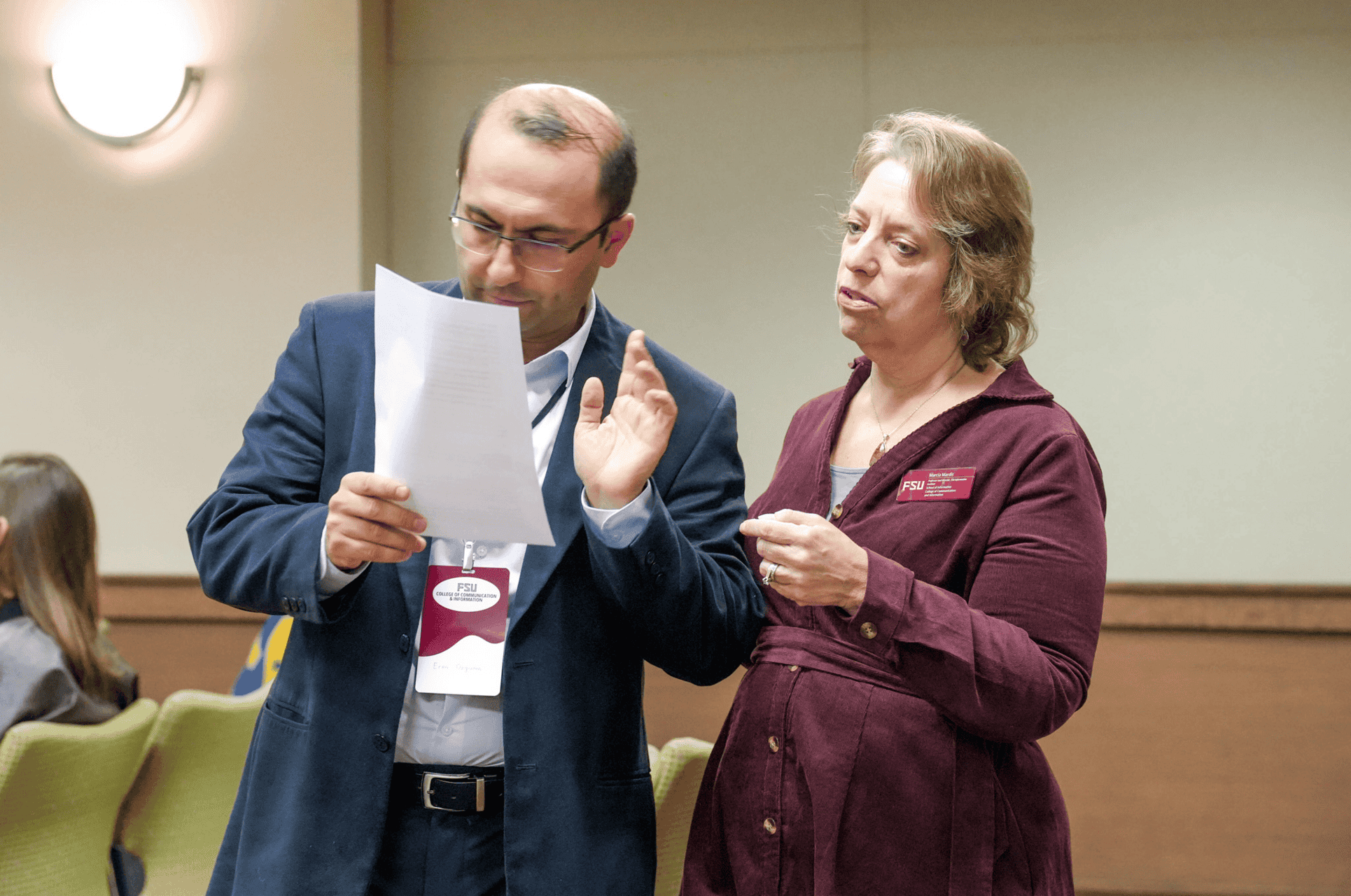 Emphasizing dialogue allowed participants to learn from one another and discuss ideas in depth. Mardis reinforced how the forum brought light to community workers, such as librarians, who often go unrecognized. Libraries serve as trusted infrastructures that play a critical role as community centers for resources and support.
“Building resilient communities requires sustained effort, advocacy, and investment in both infrastructure and human capital,” Mardis said. “It was rewarding to see participants engage deeply with the topics and gain a deep understanding of building community response.
This space for faculty, community officials at all levels, and agency representatives enabled a community dialogue that might not have happened otherwise. As crisis communication becomes essential in digital spaces, it’s important to build resilience through adaptability.
“The forum underscored the importance of creating spaces for dialogue and knowledge sharing,” Mardis said. “The expertise allowed the forum to give attendees a comprehensive understanding of the challenges and opportunities in building resilient communities and make new connections between topics.”
Beyond discussion, the forum emphasized practical application, encouraging participants to translate research insights into actionable strategies. Attendees explored how existing frameworks can be adapted to better serve communities, particularly in rapidly evolving crisis scenarios where timely, clear communication is critical.
The Building Resilience Communities: Communication, Infrastructure, & Information in Crisis facilitated the community through honest conversations about gaps between research and practice, providing opportunities for study, hands-on activity, and enhanced personal, community, and disaster resiliency.
Check out the agenda here: https://comm.cci.fsu.edu/building-resilient-communities/
View photos from the event here: https://cci.fsu.edu/building-resilient-communities-2026/