Dr. Shannon Hall-Mills and Dr. Mollie Romano, faculty members in the School of Communication Science and Disorders (SCSD), presented their research at the American Speech-Language-Hearing Association (ASHA) Convention on Nov. 20-23, 2025.
The event celebrated the association’s centennial birthday and served as a platform for sharing findings on literacy, language disorders, and clinical implementation.
Dr. Hall-Mills reflected on the significance of the centennial event and the opportunity to share research-based strategies with a national audience. She has presented at ASHA every year for about 20 years. This year, she remarked that it was an honor to serve as an invited speaker twice for the association’s 100th birthday! For her first invited talk, Hall-Mills was joined by doctoral students Hannah Hudson and Ashley Ippolito, who co-presented the research.
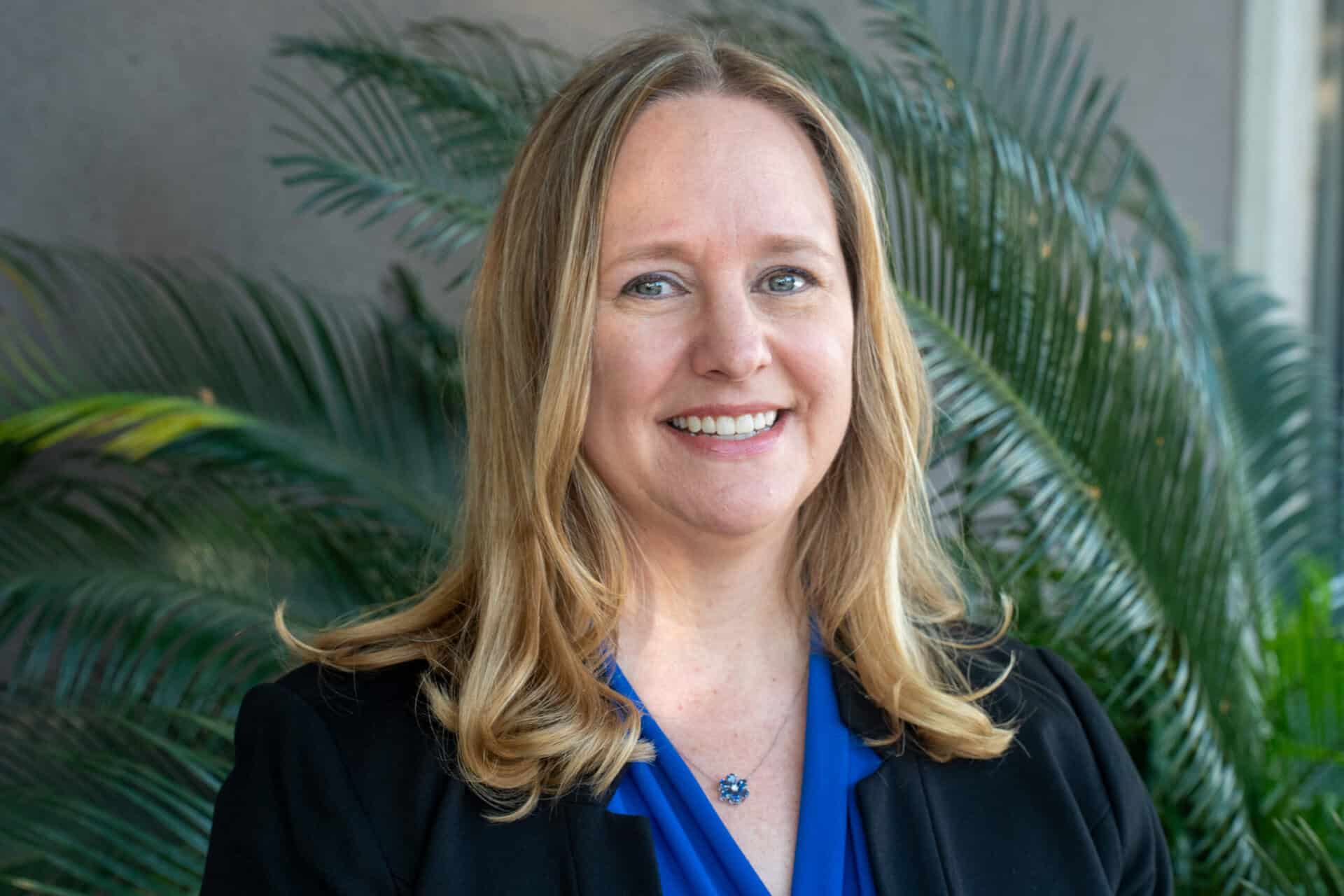
“I enjoyed sharing findings from my recent research and promoting practical strategies for clinicians supporting literacy outcomes in school-age children. There have been many follow-up conversations with other convention attendees about what I presented, which has confirmed the work I do is meaningful to the people it is intended to help,” said Hall-Mills.
Dr. Romano described the annual convention as a vital opportunity for dialogue with colleagues and clinicians. Attendees and presenters get new ideas from the field through questions, feedback, and input.
“Going to ASHA and presenting with students, colleagues, and friends is always the highlight of the year. It always reminds me that our work matters to speech pathologists, early interventionists, and caregivers all across the country!” said Romano.
The convention provided a unique venue for faculty to connect in person with students who typically participate in university programs from a distance. Among those in attendance were Fran Baehman and Aliya Junaideen, two Distance Learning students who have collaborated closely with Professor Romano on ongoing research initiatives.
“I was so excited to get to meet two students who I have worked with for over two years in our Distance Learning program for the first time in person! We had so much fun, and they did an amazi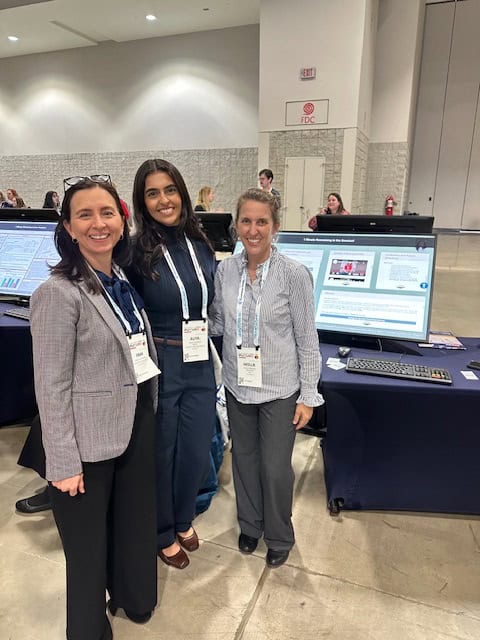 ng job sharing our work!” said Romano.
Dr. Hall-Mills observed that the convention reinforced the connection between scientific evidence and clinical application. She had two great takeaways. First, a reflection of a renewed sense of collaboration and community due to the progress that has been made in evidence-based language and literacy support. Second, an awareness of notable gaps in current knowledge of supporting individuals across the lifespan. Both takeaways showed the importance of bridging research and clinical implementation for potential future directions in research and clinical practice.
The presentations also served as a catalyst for expanding research impact through international collaboration and grant development. It created opportunities for future collaborations, even potential multi-site studies, which aligns with Hall-Mills’ long-term goals of scaling research impact and securing external funding.
Hall-Mills said, “The convention advanced my goals by providing a platform to disseminate findings on, and practical strategies to further support, the language and literacy outcomes for children and adolescents with developmental language disorder.”
Faculty members noted that the visibility provided by ASHA is essential for generating the creative momentum necessary for future projects.
“ASHA is always a way to increase the visibility of our work, but more importantly, it’s a way to make new connections and generate new ideas for what’s next. I met a few new collaborators this year and am so excited to see where we can take those sparks of ideas into action!” Romano said.
Finally, Dr. Hall-Mills emphasized how institutional support for travel directly enriches both the faculty’s research and the education of their students. She emphasized how tremendous the value of FSU’s travel support for faculty is, especially for the conference. It provides faculty with opportunities critical for advancing research and enriching teaching.
“Engaging with colleagues nationwide allows us to bring fresh perspectives, evidence-based practices, and innovative ideas back to our students. It’s important to recognize that conference participation directly benefits both scholarship and student learning,” said Hall-Mills.