
The School of Communication Science and Disorders (SCSD) and the National Student Speech Language Hearing Association (NSSLHA) hosted the 2026 SCSD Research Rounds Mini-Conference on March 27. The event brought together students and faculty to showcase poster projects with research aimed at improving the lives of individuals with communication disorders.
The goal of the event is to foster dialogue; the mini-conference served as a platform for sharing ideas and strengthening connections across all levels of the program. Attendees had the opportunity to engage with a wide range of research while building relationships with peers in their field.
Among the attendees was SCSD undergraduate program coordinator and NSSLHA faculty advisor Dr. Kimberlee Crass, who emphasized the impact of the event.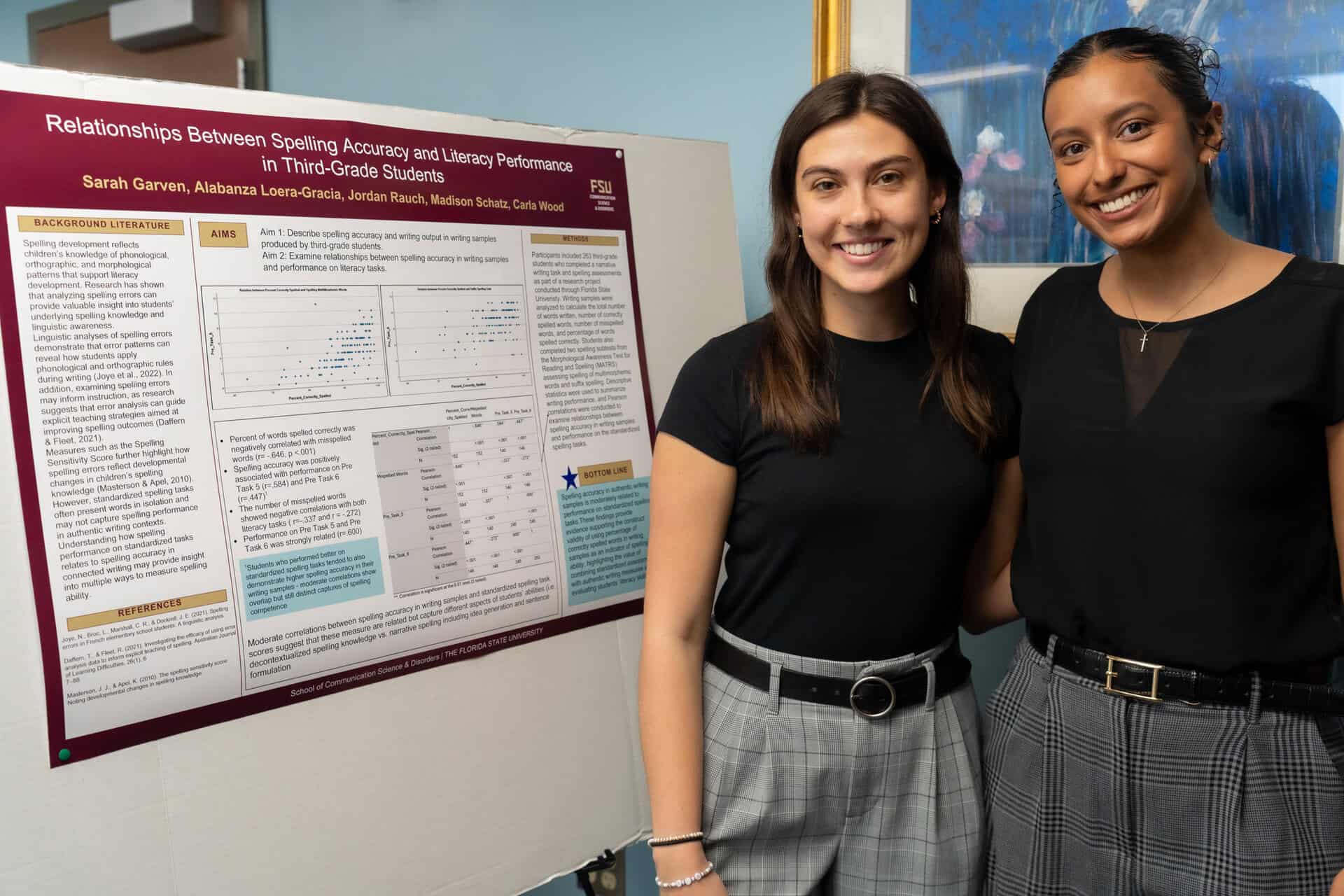
“What stood out most was the strong sense of collaboration, not only between faculty and students, but also across undergraduate, master’s, and doctoral levels,” Dr. Crass said. “It was exciting to see students at different stages of their academic journeys working together, supporting one another, and contributing meaningfully to shared research efforts.”
She also explained how the event aligned with NSSLHA’s mission of promoting student engagement and professional development, noting that the environment encouraged mentorship and shared learning experiences.
“The event really embodied the mission of the NSSLHA by creating a space where students could actively engage in scholarly work and professional dialogue,” Dr. Crass said. “Students were not only presenting their research, but also developing skills in communication, critical thinking, and collaboration.”
She noted that the overall quality and professionalism of the projects were particularly impressive. She believes that each presentation reflected a strong commitment to research and demonstrated the effort put forth by participants across the board. Looking ahead, Dr. Crass believes the mini-conference will continue to influence the SCSD community by encouraging future collaboration.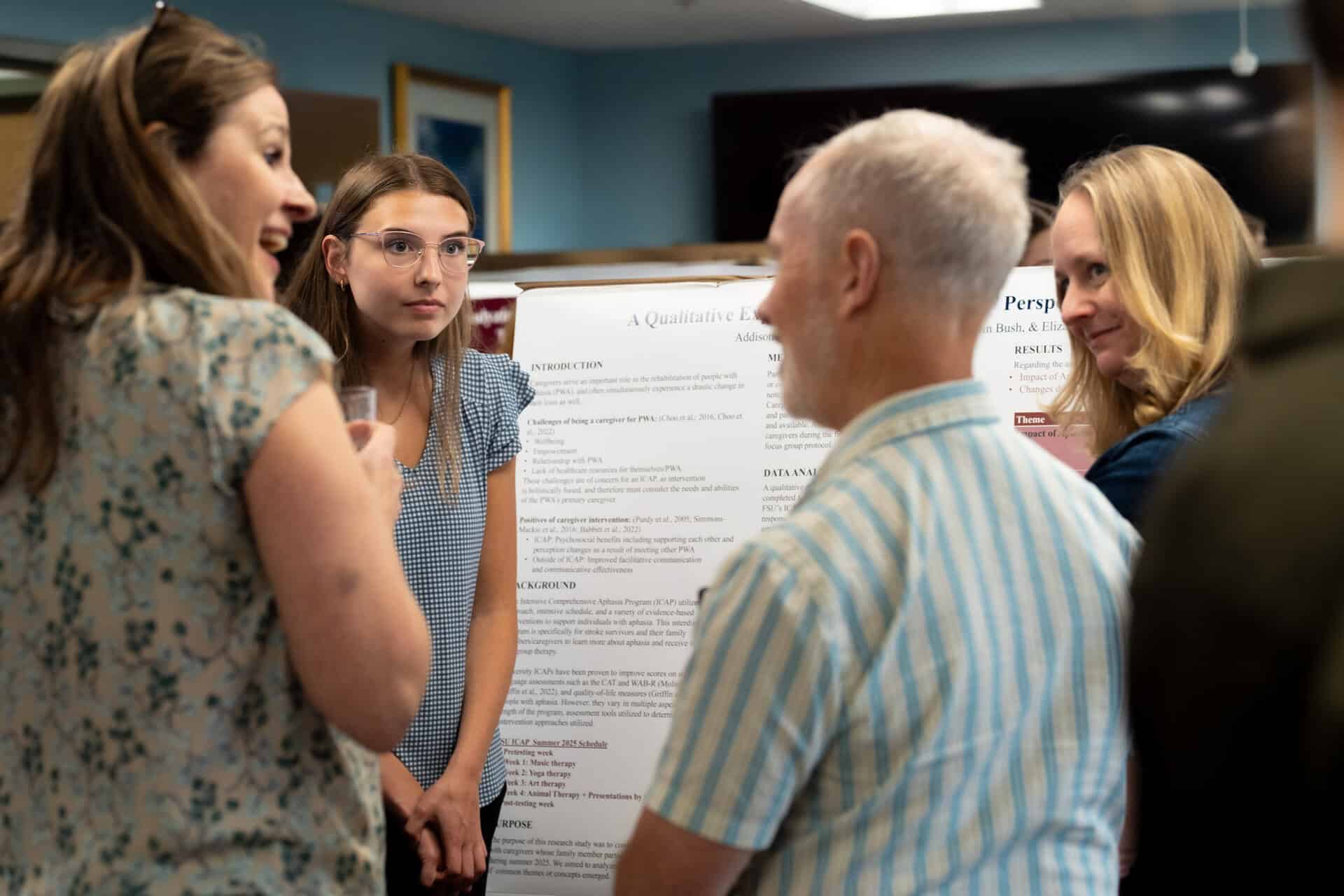
“By bringing students and faculty from different levels, it encourages ongoing mentorship and opens the door for new research partnerships,” Dr. Crass said. “Events like this help build connections early on, which can lead to more interdisciplinary and collaborative projects in the future.”
When evaluating the overall value of the conference, she believes that it’s key to building a sense of community within the program.
“Events like the Research Rounds Mini-Conference highlight not only the academic strengths of our students and faculty, but also the collaborative spirit that makes our program so special,” Dr. Crass said. “It’s inspiring to see everyone come together to share ideas, support one another, and celebrate the work being done across all levels.”